The Plant That Built Empires — And the Story Behind Silphora
The Story Behind Silphora
Over two thousand years ago, in the ancient city of Cyrene on the North African coast, a plant grew that would shape the course of an empire.
The Romans called it Silphium.
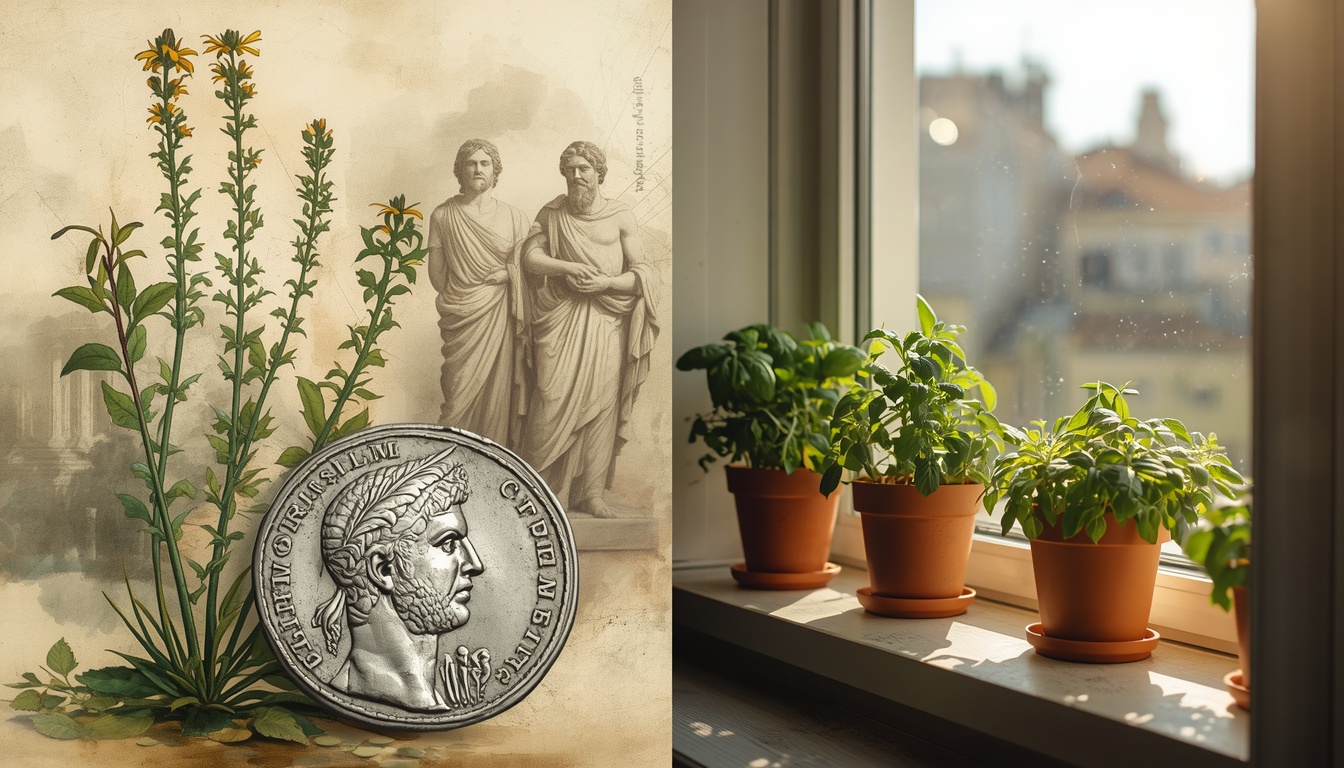
It was not beautiful, as plants go. It grew to about a metre tall, with thick stems, small yellow flowers, and large flat seed heads that the Romans stamped onto their coins. But its value was extraordinary — traded weight for weight with silver, written about by Pliny the Elder, prescribed by Hippocrates, and coveted by emperors.
What made Silphium so precious?
Everything. It was used as a medicine, a seasoning, a preservative, and a perfume. Ancient physicians prescribed it for coughs, fevers, indigestion, and wounds. Roman cooks used it in almost every recipe of note. It was the ancient world’s most versatile plant — and the world’s most wanted.
And then, somewhere around the first century AD, it was gone.
The exact cause of Silphium’s extinction is still debated by historians. Overgrazing, climate change, and relentless over-harvesting have all been proposed. What is certain is that a plant of immeasurable value — one that had sustained a civilisation for centuries — was lost forever because the people who depended on it took more than the earth could give.


We live in a world increasingly disconnected from the plants that sustain us.
Most people in cities have never grown anything. They buy vegetables in plastic packaging from supermarkets, herbs in dried jars from spice racks, and have no idea — no real idea — where any of it came from or how it grew.
This isn’t a criticism. It’s simply the reality of modern life.
But something is lost in that disconnection. The Romans — for all their faults — understood the value of a plant. They understood that the natural world was not simply a backdrop to human life, but a foundation of it.
Silphora exists to help people rediscover that understanding.
Not in an abstract, philosophical way. In a very practical, immediate, hands-in-soil way.
What Silphora Is
Silphora is a home gardening guide built for people who live in apartments, small flats, and city homes — people who don’t have gardens, but who want to grow something.
We write guides on growing herbs on windowsills, vegetables on balconies, tomatoes in pots, and plants in every corner of a home that gets enough light.
We review the tools and kits that actually work — and we’re honest about the ones that don’t.
We publish weekly guides that make gardening feel achievable rather than intimidating.
And we do all of it guided by one belief:
Anyone can grow something. Any space is enough. Any skill level is a starting point.

Rediscover nature’s lost wisdom
Our Mission
Our Philosophy
Why the Name Silphora
The name is a direct homage to Silphium.
We chose it deliberately — not as a melancholy nod to something lost, but as a reminder of what plants have meant to human beings throughout history. Silphium was irreplaceable. The plants in your home are not — they’re available, accessible, and waiting to be grown.
The suffix -ora comes from the Latin florere — to flourish, to bloom.
Silphora: where the ancient plant’s legacy flourishes again. In your home. On your windowsill. On your balcony. In every small green space you claim for yourself.


What You’ll Find Here?
Growing guides — practical, step-by-step instructions for growing herbs, vegetables, and houseplants indoors and on balconies. Written for beginners, useful for everyone.
Honest product reviews — we test the kits, seeds, tools, and systems that claim to make indoor growing easier. We tell you what works, what doesn’t, and what’s worth your money.
Seasonal guides — what to plant, when to plant it, and how to keep things growing year-round regardless of the weather outside.
The Silphora weekly newsletter — every week, one plant tip, one product recommendation, and one piece of gardening knowledge you can use immediately.


A Personal Note
Silphora began with a single pot of basil on a kitchen windowsill.
It died within three weeks.
The second pot lasted longer. The third one made it to harvest. By the fourth, we understood what basil actually needed — and started writing it down so others wouldn’t have to make the same mistakes.
That’s what Silphora is, at its core. A record of what we’ve learned, offered freely to anyone who wants to grow something and doesn’t know where to start.
The Romans lost Silphium because they didn’t know how to take care of it.
We know how to take care of ours.