From Southern Africa to the Modern Home: The Journey of the Spider Plant
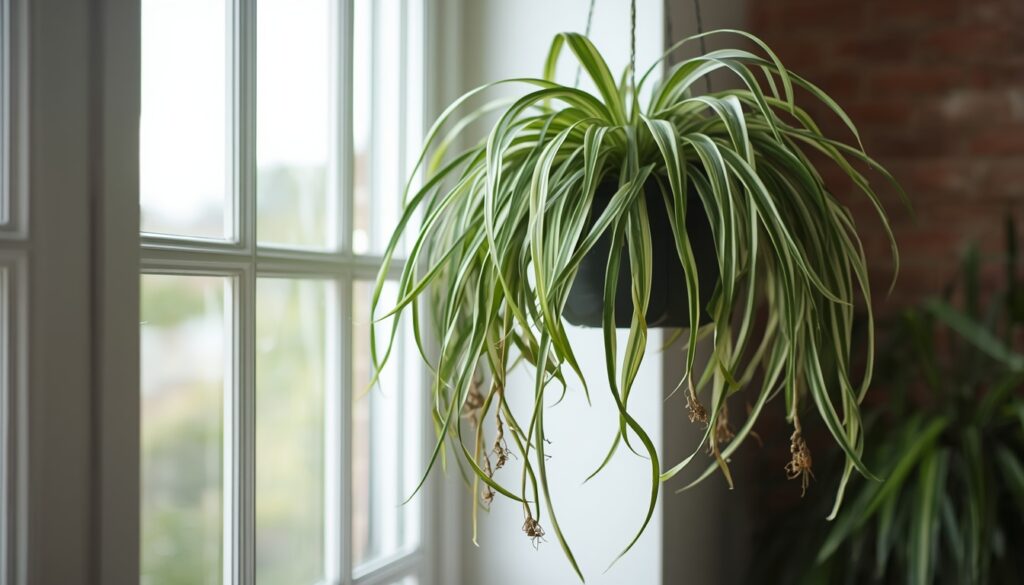
Long before it appeared beneath the soft light of a modern kitchen window, the spider plant belonged to a very different world.
Opening Story
Long before it appeared beneath the soft light of a modern kitchen window, the spider plant belonged to a very different world. en.wikipedia In the shaded understory of South African forests, where dappled sunlight filtered through river-valley canopies and mist clung to rocky embankments, Chlorophytum comosum grew quietly as ground cover, its arching leaves forming colonies on the forest floor. pza.sanbi
This was a plant shaped by shade, by seasonal rains, by the patient rhythms of a landscape where survival meant adapting to both drought and deluge. pza.sanbi Its thick, fleshy roots stored water like underground reservoirs. Its long, strap-like leaves captured whatever light reached the forest floor. And when conditions were right, it sent out slender stems bearing tiny plantlets—clones of itself, ready to take root wherever they touched soil. en.wikipedia
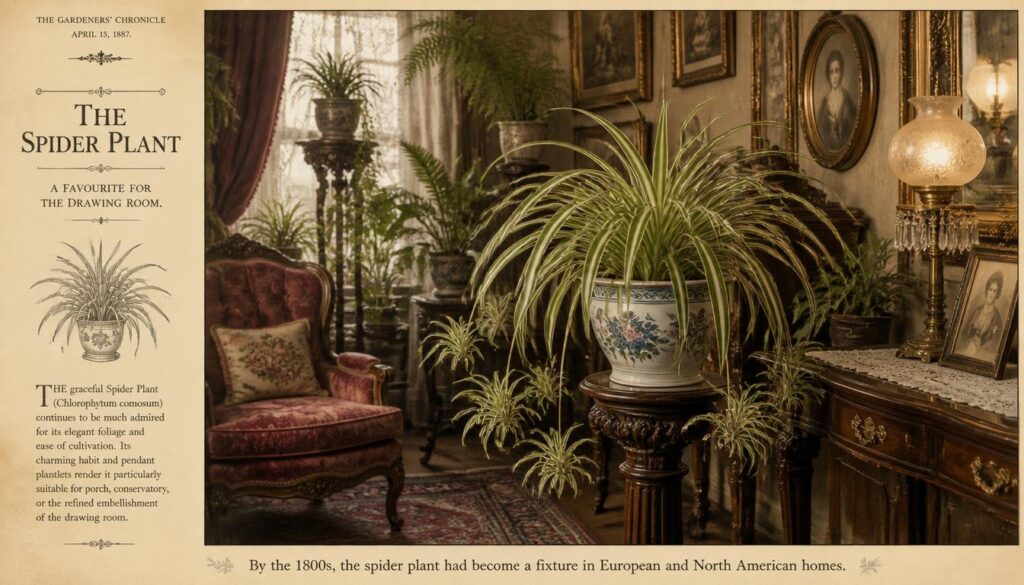
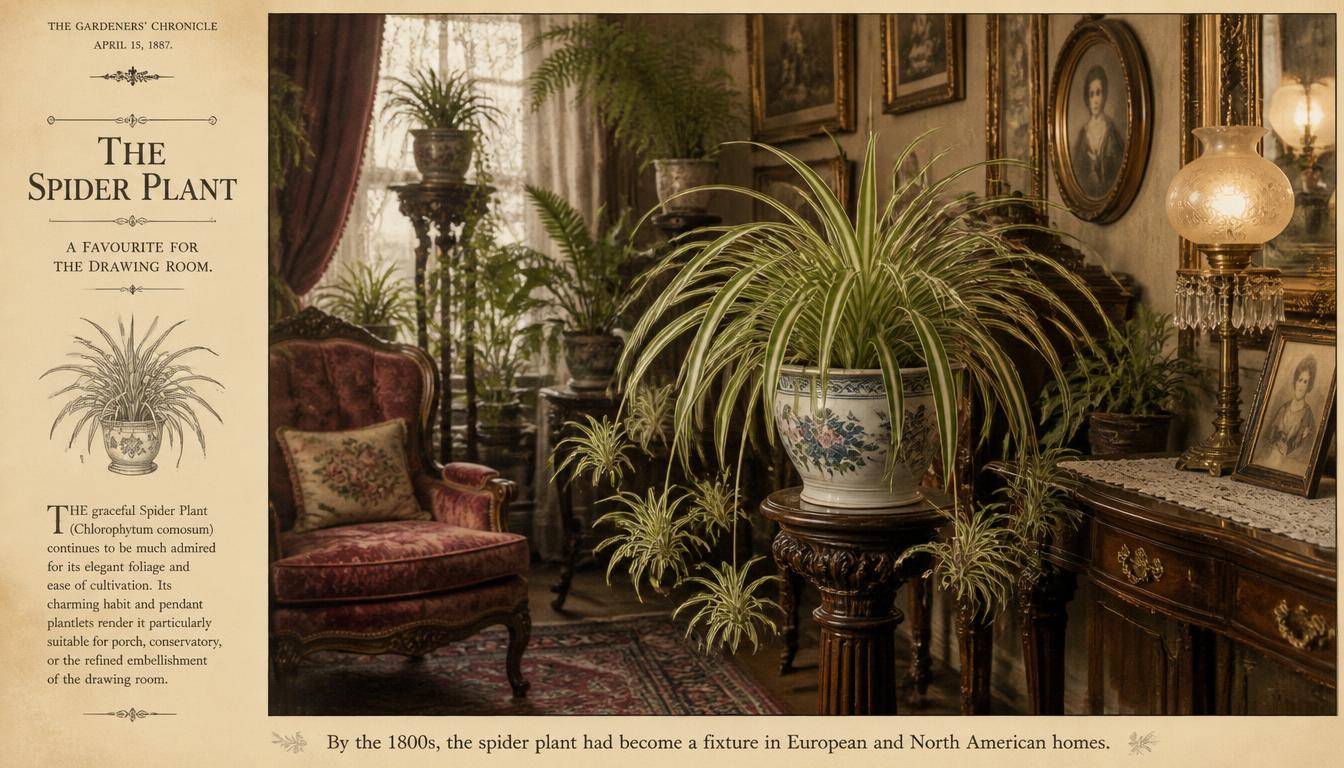
Centuries later, that same adaptive genius would carry the spider plant across oceans. livetoplant European botanists encountered it during expeditions to the Cape in the late 1700s. en.wikipedia By the 1800s, it had reached Victorian drawing rooms. livetoplant In the 1970s, it hung in macramé planters in apartments from London to Los Angeles. plantsbythere Today, it remains one of the most widely grown houseplants on Earth—found in offices, schools, bedrooms, and bathrooms from Tokyo to Toronto. en.wikipedia
Why this plant?
Why not the hundreds of other species that also grow in Southern Africa? The answer lies in a combination of botanical resilience, aesthetic grace, and an almost uncanny ability to thrive where other plants fail. missouribotanicalgarden The spider plant does not demand perfection. It tolerates neglect. It forgives mistakes. And it reproduces so readily that a single plant can, within a year, give rise to dozens of offspring. en.wikipedia
To understand the spider plant is to understand something about how humans choose the plants that enter our lives. plantsbythere We do not always select the rarest, the most exotic, or the most demanding. Often, we choose the ones that stay with us—the ones that adapt to our rhythms as much as we adapt to theirs.
Botanical Profile
| Feature | Information |
|---|---|
| Common Name | Spider Plant, Spider Ivy, Airplane Plant, Ribbon Plant, Hen and Chicks |
| Scientific Name | Chlorophytum comosum (Thunb.) Jacques |
| Family | Asparagaceae |
| Genus | Chlorophytum |
| Native Range | Tropical and Southern Africa (South Africa, Zimbabwe, Mozambique, and surrounding regions) |
| Natural Habitat | Shaded forest understory, rocky slopes, river valleys, thickets; sea level to 1,800 m elevation |
| Plant Type | Herbaceous evergreen perennial |
| Growth Habit | Rosette-forming with arching leaves; produces stolons bearing plantlets |
| Mature Size | 30–60 cm (12–24 in) tall and wide; trailing stems can extend 60–90 cm (24–36 in) |
| USDA Zones | 9–11 (outdoors); grown indoors elsewhere |
| Light | Bright, indirect light; tolerates low light |
| Water | Moderate; allow top 2–3 cm (1 in) of soil to dry between waterings |
| Humidity | Average indoor humidity (40–60%); tolerates lower levels |
| Temperature | 15–27°C (60–80°F); avoid below 10°C (50°F) |
| Soil | Well-draining potting mix; slightly acidic to neutral pH |
| Fertilizer | Balanced liquid fertilizer monthly during growing season |
| Propagation | Plantlets (spiderettes), division, or seed |
| Toxicity | Non-toxic to cats, dogs, and humans |
| Difficulty | Easy—ideal for beginners |
| Lifespan | Perennial; individual plants live many years with proper care |
Botanical Details
- The spider plant produces thick, tuberous roots that function as water-storage organs—an adaptation to its native habitat’s seasonal rainfall patterns. pza.sanbi
- Its arching leaves grow from a central rosette and can reach 30–45 cm (12–18 in) in length, with variegated cultivars displaying distinctive white or cream stripes. en.wikipedia
- Flowering occurs on long, slender stems that also bear the plant’s signature “spiderettes”—tiny plantlets that develop at nodes along the stem. en.wikipedia
- The small, star-shaped flowers are white and relatively inconspicuous, typically appearing in clusters along the flowering stem. en.wikipedia
- The small, star-shaped flowers are white and relatively inconspicuous, typically appearing in clusters along the flowering stem. en.wikipedia
- Spider plants are clonal reproducers: each spiderette is genetically identical to the parent plant, allowing rapid colonization of suitable habitat. en.wikipedia
- In its native range, the plant grows in colonies on the forest floor, often forming dense patches in shaded, moist environments. pza.sanbi
- The species has become naturalized beyond Africa, including in Western Australia and Bangladesh, demonstrating its ecological flexibility. en.wikipedia
- Multiple cultivars exist, including ‘Variegatum’ (white-edged leaves), ‘Vittatum’ (white central stripe), and ‘Bonnie’ (curly-leaved form). theplantindex
The Historical Journey
Where the Plant Began ?
The story of the spider plant begins in Southern Africa, where it evolved over millennia in the shaded understory of evergreen forests. en.wikipedia Its native range stretches from Swellendam in the Western Cape to the Soutpansberg in Limpopo Province, encompassing diverse habitats from coastal regions to mountainous terrain up to 1,800 meters elevation. pza.sanbi
In this environment, Chlorophytum comosum found its ecological niche as a ground-covering perennial, thriving in the dappled light beneath forest canopies and along rocky slopes where competition from taller vegetation was limited. pza.sanbi The plant’s thick, water-storing roots allowed it to survive periods of drought, while its preference for shade protected it from the intense African sun. pza.sanbi
Rainfall in its native habitat ranges from 500 to 2,000 mm annually, occurring mainly during spring and summer—though in the Western Cape, winter rains also contribute to the plant’s water supply. pza.sanbi This seasonal pattern shaped the spider plant’s growth rhythm: active during wet periods, more dormant during dry spells.
The First Human Connections
While specific records of early human use are sparse, the spider plant’s presence in Southern Africa means it would have been encountered by indigenous peoples for thousands of years. pza.sanbi The region’s rich ethnobotanical traditions include numerous plants used for medicinal, culinary, and practical purposes, though Chlorophytum comosum does not appear prominently in surviving documentation of traditional medicine. pmc.ncbi.nlm.nih
What is clear is that the plant’s ease of propagation and hardiness would have made it a candidate for informal cultivation—transplanted from forest to homestead, from wild colony to garden corner. livetoplant Its non-toxic nature and attractive foliage may have contributed to its early adoption as an ornamental, even before European botanists took notice. theplantindex

Ancient Civilizations
Unlike plants such as aloe or castor bean, which feature prominently in ancient Egyptian or Mediterranean texts, the spider plant does not appear to have played a major role in the recorded traditions of ancient civilizations. en.wikipedia Its native range lies south of the major trade routes that connected Egypt, the Levant, and the Mediterranean world, limiting its exposure to early botanical documentation. en.wikipedia
This does not mean the plant was unknown—it simply means its cultural significance remained localized within Southern African communities, where oral traditions and practical knowledge may have preserved its uses without leaving written records. pmc.ncbi.nlm.nih
Medicine, Food, Ritual, and Symbolism
Modern phytochemical research has identified bioactive compounds in Chlorophytum comosum, including flavonoids and phenolic compounds with antioxidant properties. pmc.ncbi.nlm.nih
usSome studies suggest potential anti-inflammatory, hepatoprotective, and antimicrobial effects, though these findings come primarily from laboratory research rather than traditional practice. pmc.ncbi.nlm.nih
In contemporary ethnobotanical studies, the plant is noted as having “medicinal potential,” but specific traditional uses remain poorly documented compared to other Southern African medicinal plants. pmc.ncbi.nlm.nih This gap in the historical record is itself significant: it reminds us that not every plant’s relationship with humanity is preserved in texts or recipes. Some plants simply lived alongside people, quietly useful, quietly present.
The spider plant carries
The spider plant carries no major religious or symbolic associations in the way that, say, the lotus does in Buddhism or olive does in Christianity. en.wikipedia
Its significance is more intimate and domestic: a plant that stays, that multiplies, that asks little and gives much.
The Age of Trade
The spider plant’s journey beyond Africa began with European botanical exploration of the Cape region in the 1700s. en.wikipedia Swedish naturalist Carl Peter Thunberg, working in South Africa during the late 18th century, provided the first formal scientific description of the species in 1794, naming it Anthericum comosum in his Prodromus Plantarum Capensium. en.wikipedia
This was the era of botanical collection and classification, when European powers sent naturalists around the world to document and catalog the flora of newly encountered territories. en.wikipedia Plants were gathered, pressed, described, and often transported back to botanical gardens in London, Paris, Leiden, and beyond. livetoplant
The spider plant, with its graceful form and easy propagation, was among the species that made this transition from wild African forest to cultivated European greenhouse. en.wikipedia By the early 1800s, it had been introduced to horticulture in Europe and North America as an ornamental houseplant. livetoplant
From Wild Plant to Cultivated Plant
The domestication of the spider plant was less a deliberate breeding program and more a process of selection by circumstance. en.wikipedia Gardeners and plant enthusiasts naturally favored individuals that were more vigorous, more variegated, or more prolific in producing plantlets. theplantindex
Over generations, this informal selection gave rise to the cultivars we know today: ‘Variegatum’ with its white-edged leaves, ‘Vittatum’ with its central white stripe, and ‘Bonnie’ with its distinctive curly foliage. theplantindex These cultivars retain the species’ fundamental hardiness while offering aesthetic variation that appeals to different tastes.
The plant’s reproductive biology—specifically its ability to produce clones via spiderettes—meant that successful cultivars could be propagated indefinitely without losing their characteristics. en.wikipedia A single variegated specimen could give rise to thousands of identical offspring, spreading the cultivar across continents through trade, gift-giving, and commercial horticulture. en.wikipedia
Arrival in the Modern Home
The spider plant’s ascent to global popularity accelerated in the 20th century. plantsbythere By the 1970s, it had become an icon of the indoor plant boom, hanging in macramé planters in apartments and homes across the Western world. plantsbythere Its tolerance of less-than-ideal conditions made it perfect for the era’s casual approach to houseplant care. missouribotanicalgarden
In 1989, NASA’s Clean Air Study brought renewed attention to the spider plant, identifying it as one of the top species for removing formaldehyde from sealed chambers. ntrs.nasa While the study’s conditions were far removed from typical home environments, the finding cemented the spider plant’s reputation as not just decorative but functional—a plant that could actively improve indoor air quality. ntrs.nasa
Today, the spider plant remains a staple of indoor gardening, recommended for beginners and valued by experienced plant parents alike. missouribotanicalgarden It appears in offices, schools, hospitals, and homes worldwide—a botanical ambassador from Southern Africa that has found its place in human habitats across the globe. en.wikipedia
Leaves and Light Capture
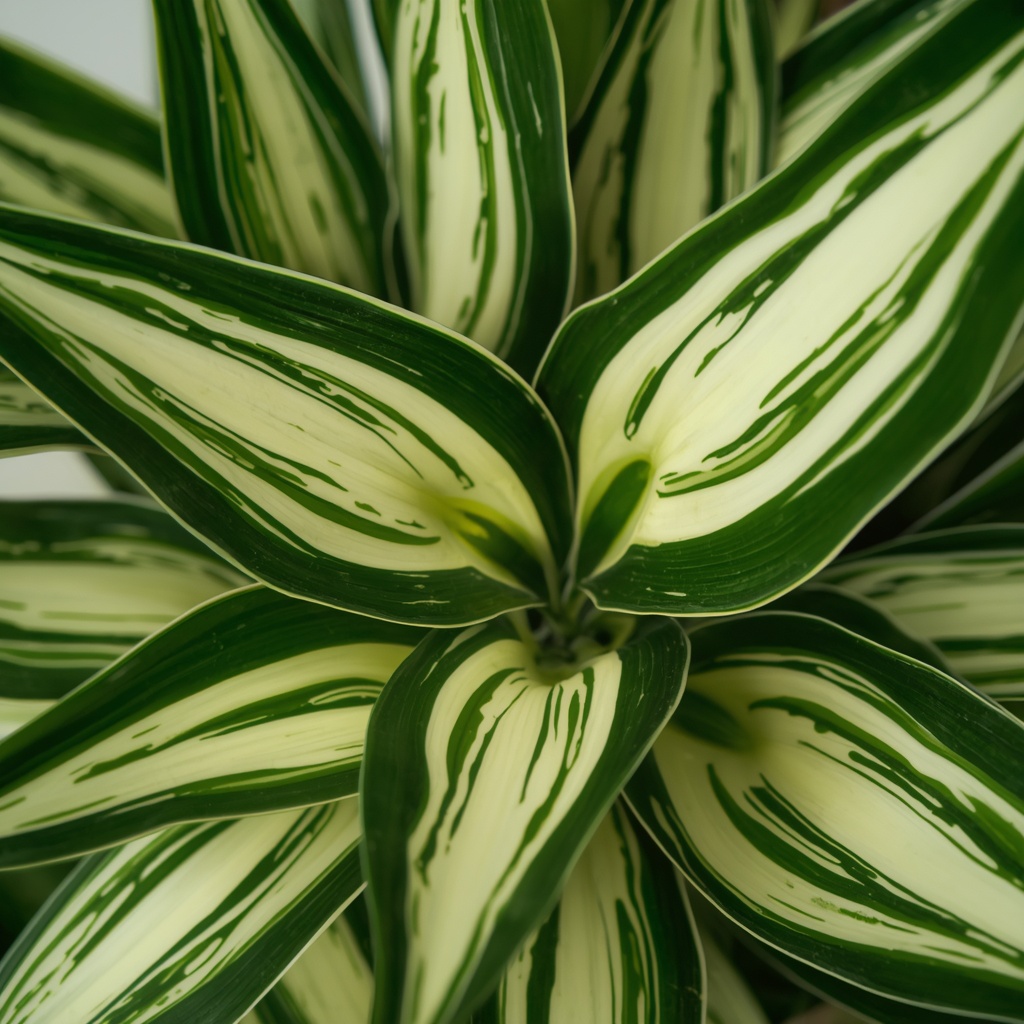
The spider plant’s leaves are its most distinctive feature: long, arching, strap-like structures that emerge from a central rosette. en.wikipedia In variegated cultivars, these leaves display striking patterns of green and white or cream, created by differences in chlorophyll distribution. en.wikipedia
Each leaf is composed of parallel veins running its length—a characteristic of monocots, the plant group that includes grasses, lilies, and asparagus (to which the spider plant is related via the Asparagaceae family). en.wikipedia This venation pattern provides structural support while allowing the leaf to flex and arch gracefully.
The leaf surface is relatively smooth, with a waxy cuticle that helps reduce water loss—a useful adaptation in environments where moisture may be seasonal. pza.sanbi Stomata (tiny pores for gas exchange) are present on the leaf surface, opening during daylight to allow carbon dioxide intake for photosynthesis and closing at night to conserve water.
Roots
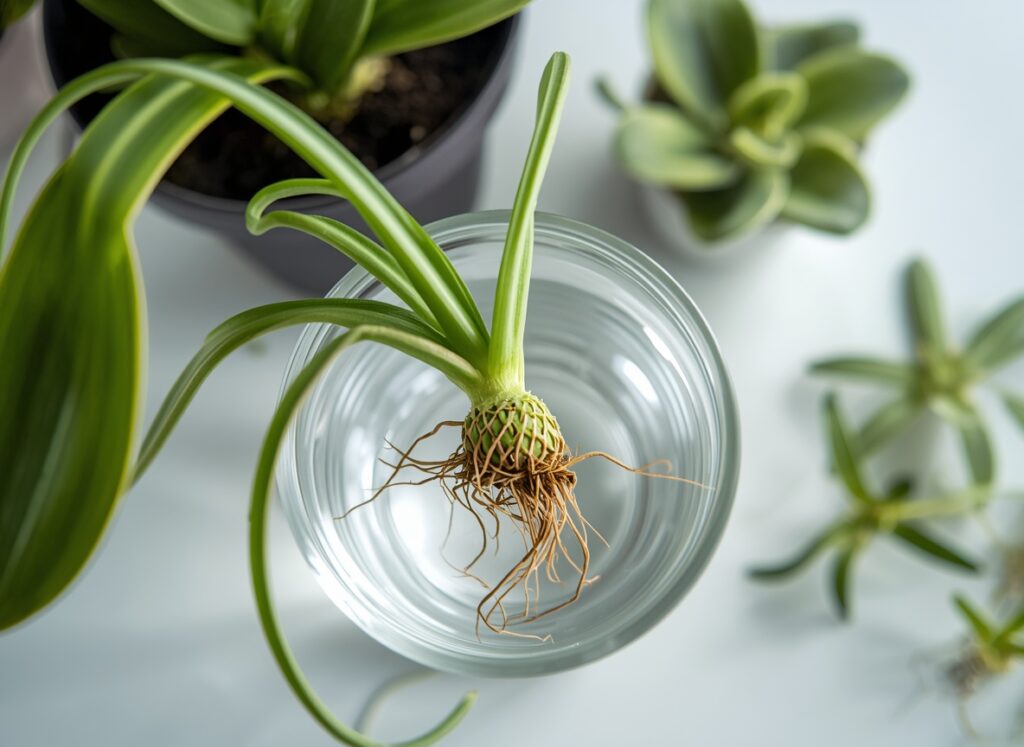
Perhaps the spider plant’s most remarkable adaptation lies underground. Its root system includes thick, tuberous roots that function as water-storage organs—essentially biological reservoirs that allow the plant to survive periods of drought. pza.sanbi
These fleshy roots are pale and somewhat swollen, storing water in their tissues much like a succulent. This adaptation reflects the plant’s native habitat, where rainfall is seasonal and dry periods are common. pza.sanbi When water is available, the roots absorb and store it; when conditions dry out, the plant draws on these reserves.
The root system also includes finer, fibrous roots responsible for nutrient uptake. pza.sanbi Together, these two root types create a system that is both resilient and efficient—capable of surviving neglect while thriving when conditions are favorable.
Photosynthesis
Like most plants, the spider plant uses C3 photosynthesis, the most common photosynthetic pathway. amresearchjournal In this process, carbon dioxide from the air combines with water (absorbed through the roots) in the presence of light to produce sugars (the plant’s energy source) and oxygen (released as a byproduct). amresearchjournal
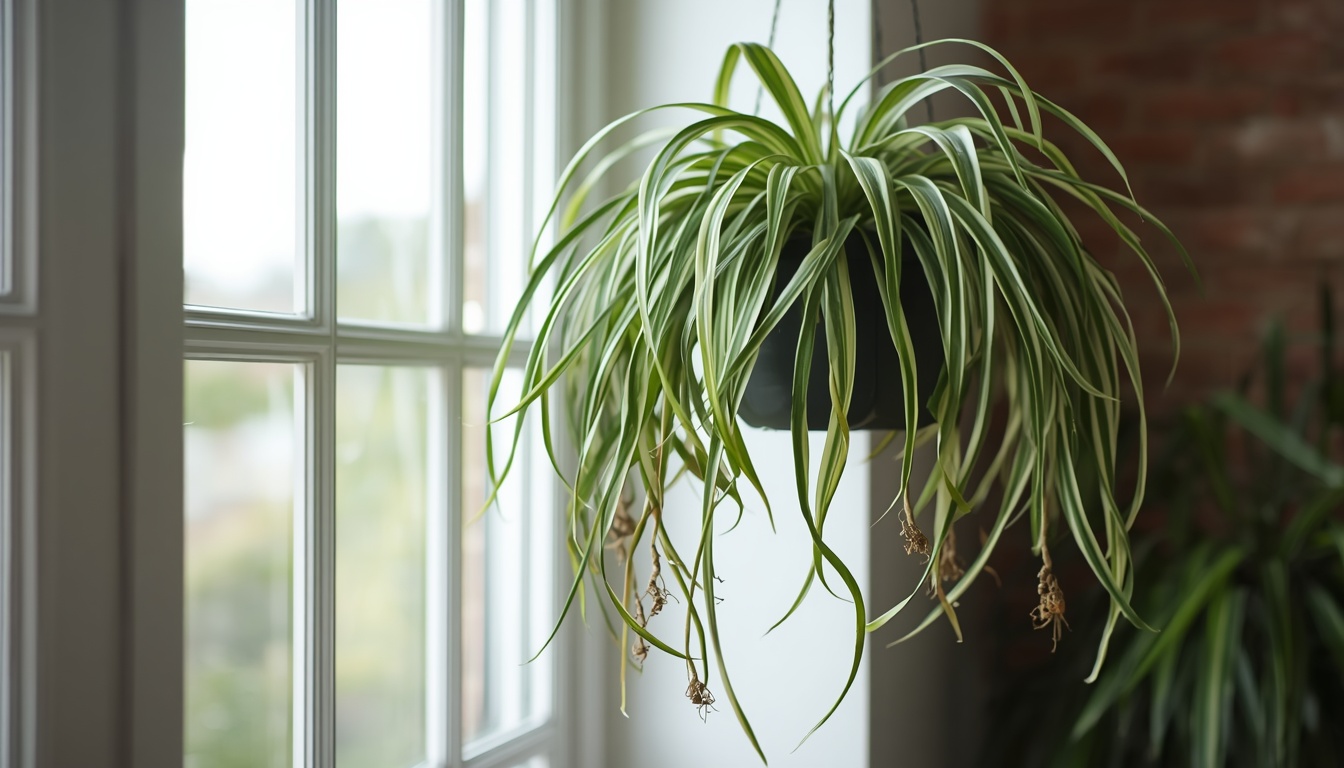
The plant’s preference for bright, indirect light reflects its evolutionary history in the forest understory, where direct sunlight was filtered through canopy leaves. pza.sanbi Too much direct sun can scorch the leaves, while too little light slows growth and reduces variegation in patterned cultivars. missouribotanicalgarden
Water Management
The spider plant’s water management strategy is one of moderation and storage. pza.sanbi It does not require constant moisture, nor does it tolerate waterlogged soil. missouribotanicalgarden Instead, it thrives on a cycle of watering followed by a period of slight drying—mimicking the seasonal rainfall patterns of its native habitat. pza.sanbi
The thick roots play a crucial role here, absorbing excess water during watering and releasing it slowly during dry periods. This buffer protects the plant from both short-term drought and occasional overwatering, though prolonged soggy soil will eventually cause root rot. missouribotanicalgarden
Light
In its natural environment, the spider plant grows in partial to full shade, receiving dappled sunlight through forest canopies. pza.sanbi This evolutionary history explains its tolerance for lower light conditions indoors. missouribotanicalgarden
However, the plant still requires sufficient light for photosynthesis and healthy growth. amresearchjournal Bright, indirect light—such as near an east- or north-facing window—is ideal. missouribotanicalgarden Direct afternoon sun, especially through glass, can burn the leaves, while deep shade may cause the plant to become leggy and lose variegation. theplantindex
Reproduction
The spider plant’s reproductive strategy is one of the reasons for its success as a houseplant. en.wikipedia It reproduces through multiple methods:
Sexual reproduction: The plant produces small, white, star-shaped flowers on long stems. en.wikipedia These flowers can be pollinated (often by insects in the wild) to produce seeds, though seed propagation is less common in cultivation. en.wikipedia
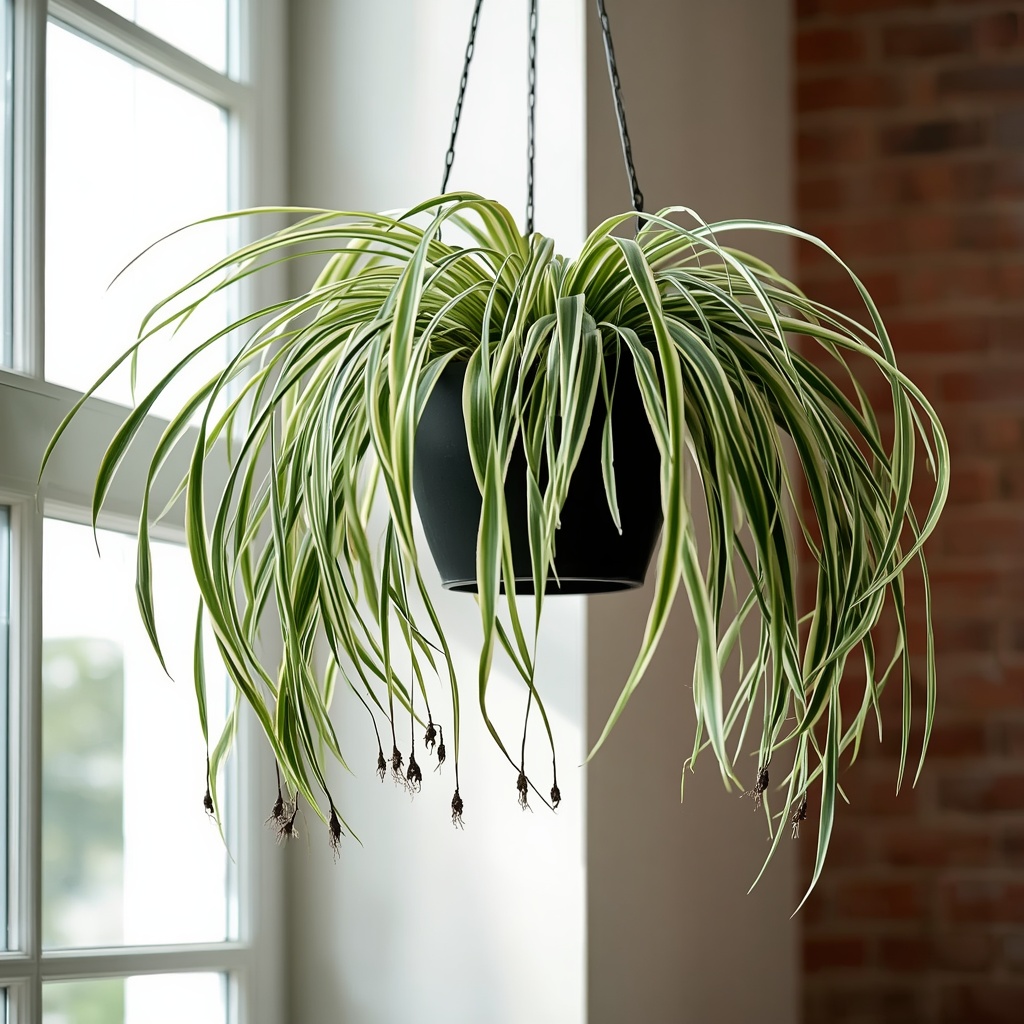
Sexual reproduction (vegetative): More commonly, the flowering stems develop nodes that give rise to plantlets—miniature versions of the parent plant. en.wikipedia These “spiderettes” hang from the parent on slender stolons, ready to take root wherever they contact soil. en.wikipedia
This clonal reproduction means each spiderette is genetically identical to the parent, preserving successful traits across generations. en.wikipedia It also allows rapid propagation: a single healthy plant can produce dozens of offspring within a year. en.wikipedia
Adaptations
The spider plant’s success stems from several key adaptations:
Water-storage roots allow survival during dry periods. pza.sanbi
Shade tolerance enables growth in low-light environments where many plants would fail. missouribotanicalgarden
Vegetative propagation via spiderettes ensures rapid colonization of suitable habitat. en.wikipedia
Flexible growth habit allows the plant to thrive in various conditions, from forest floor to hanging basket. en.wikipedia
Non-toxic chemistry makes it safe around pets and children, increasing its appeal as a houseplant. pubmed.ncbi.nlm.nih
Plant Chemistry
Recent research has identified various bioactive compounds in Chlorophytum comosum, including flavonoids, phenolic acids, and other phytochemicals with antioxidant properties. pmc.ncbi.nlm.nih Laboratory studies suggest potential anti-inflammatory, hepatoprotective, and antimicrobial effects, though these findings require further investigation before any health claims can be made. pmc.ncbi.nlm.nih
The plant’s leaves also produce volatile organic compounds with mild antimicrobial activity, contributing to its reputation for improving indoor air quality. journals.rcsi However, these effects are modest in typical home environments. alibaba
Recent Science
The most widely cited research on spider plants comes from NASA’s 1989 Clean Air Study, which tested the ability of common houseplants to remove volatile organic compounds (VOCs) from sealed chambers. ntrs.nasa Spider plants removed up to 95% of formaldehyde from test chambers within 24 hours, ranking among the top performers. nwf
However, subsequent research has clarified that these results apply to small, sealed environments—not typical homes with ventilation, air exchange, and much larger volumes. alibaba While spider plants do remove some VOCs, the effect in real-world settings is modest compared to proper ventilation. alibaba
More recent studies have explored enhancing the spider plant’s air-purifying capacity by inoculating it with endophytic bacteria that degrade formaldehyde. link.springer Early results suggest this approach could improve removal efficiency, particularly at night when plants are not actively photosynthesizing. link.springer

The Plant in Modern Life
The spider plant
occupies a unique place in contemporary indoor gardening. plantsbythere It is neither rare nor demanding, yet it remains perpetually popular—a testament to its combination of beauty, resilience, and ease. missouribotanicalgarden
Indoor Gardening
For beginners, the spider plant is often the first houseplant that succeeds. missouribotanicalgarden Its tolerance for imperfect conditions—occasional missed waterings, less-than-ideal light, average indoor humidity—makes it forgiving of the mistakes that kill more sensitive species. missouribotanicalgarden
At the same time, experienced plant enthusiasts appreciate the spider plant for different reasons: its elegant form, its prolific propagation, its role in creating a lush, layered indoor garden. A single plant can, within months, give rise to a collection of offspring—perfect for sharing with friends or filling multiple spaces. en.wikipedia
Balcony and Urban Gardening
In warmer climates (USDA zones 9–11), spider plants can be grown outdoors in shaded patios, balconies, or garden beds. missouribotanicalgarden They thrive in containers with good drainage, their arching leaves and trailing spiderettes creating a cascading effect.
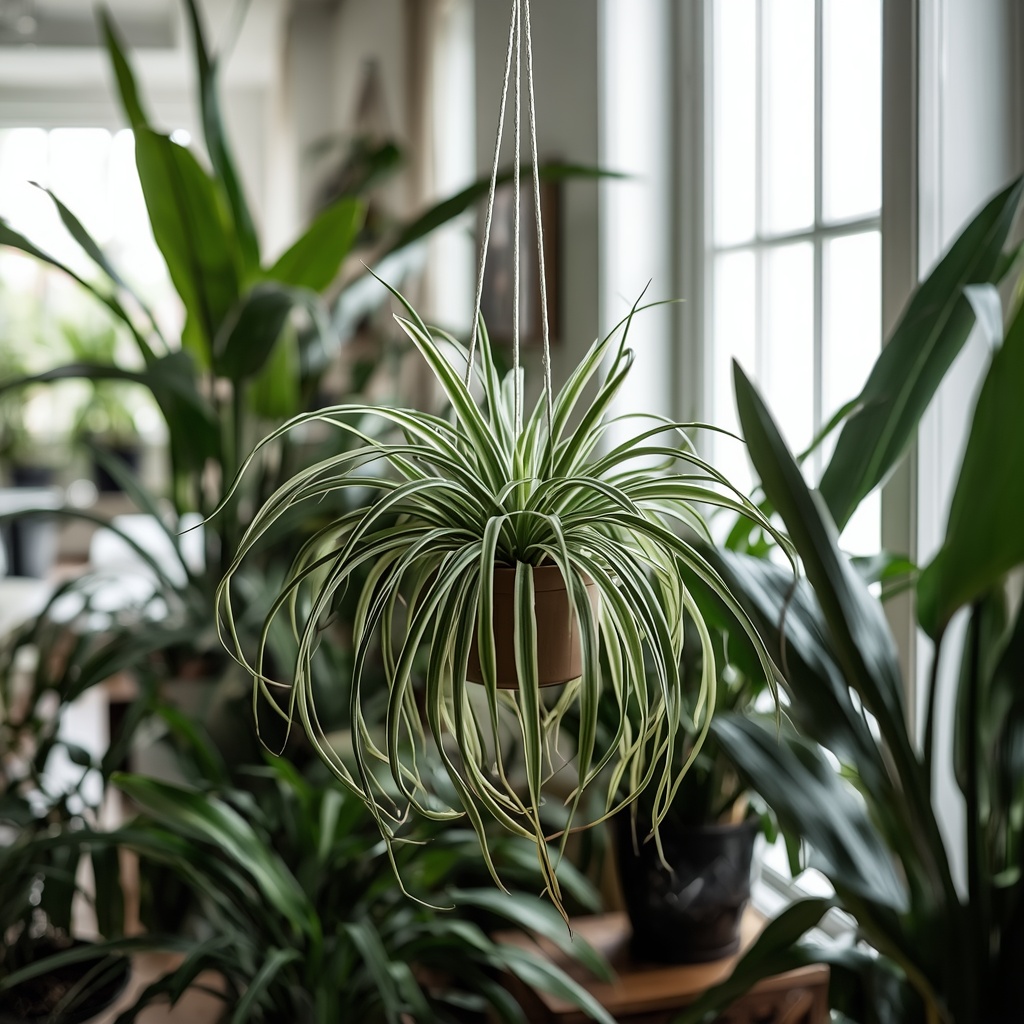
For urban gardeners with limited space, the spider plant’s compact rosette and vertical growth habit make it ideal for small balconies, window boxes, or hanging baskets. plantsandflowersfoundationholland Its shade tolerance means it can succeed even on north-facing balconies where sun-loving plants would struggle. landscapeplants.aub.edu
Decoration and Lifestyle
Aesthetically, the spider plant brings a soft, organic element to interior spaces. Its arching leaves create movement and texture, while variegated cultivars add visual interest without overwhelming a room’s color scheme. theplantindex
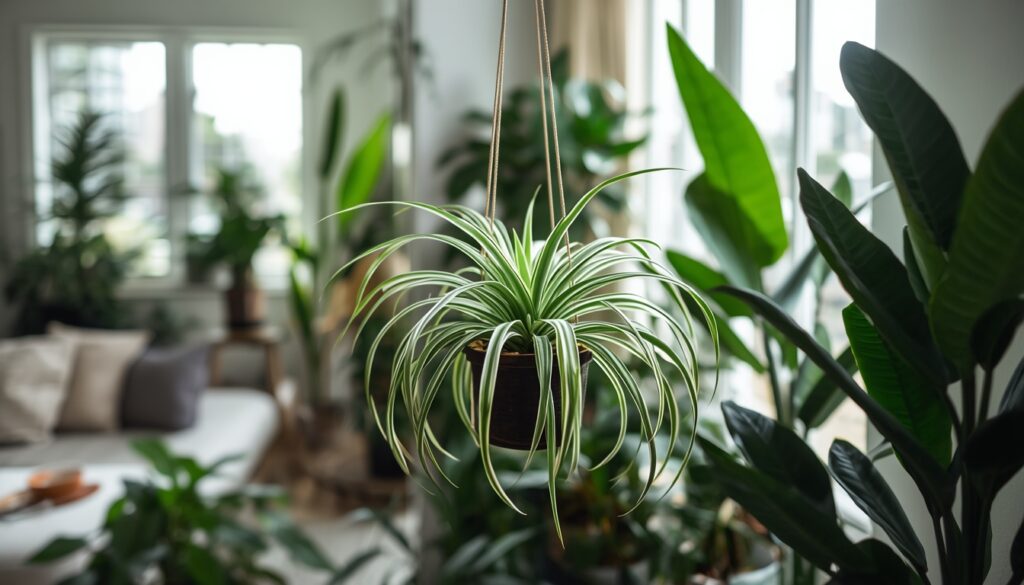
The plant’s natural tendency to produce trailing stems makes it particularly well-suited to hanging planters—a style that peaked in the 1970s but has seen renewed popularity in recent years. plantsbythere A spider plant in a macramé hanger or modern ceramic pot adds height and dimension to a room, drawing the eye upward
Wellness and Air Quality
Aesthetically, the spider plant brings a soft, organic element to interior spaces. Its arching leaves create movement and texture, while variegated cultivars add visual interest without overwhelming a room’s color scheme. theplantindex
The spider plant’s non-toxic nature adds to its wellness appeal. pubmed.ncbi.nlm.nih Unlike some popular houseplants (such as pothos or peace lily), it poses no risk to pets or small children who might nibble on leaves. pubmed.ncbi.nlm.nih This safety profile makes it a practical choice for households with curious cats, dogs, or toddlers.
Sustainability and Education
The spider plant’s ease of propagation makes it an excellent subject for teaching plant biology. en.wikipedia Children can watch spiderettes develop roots, learn about vegetative reproduction, and experience the satisfaction of growing new plants from existing ones.
From a sustainability perspective, the spider plant’s longevity and propagatability mean that a single purchase can yield years of greenery—and potentially hundreds of new plants through sharing and propagation. en.wikipedia This reduces the need for repeated purchases and minimizes the environmental footprint associated with commercial plant production and transport.
The spider plant Growing Guide
1 .Choosing a Healthy Plant
When selecting a spider plant, look for:
Vibrant leaves: Healthy plants have firm, uniformly colored leaves without extensive browning or yellowing. [missouribotanicalgarden](https://www.missouribotanicalgarden.org/PlantFinder/PlantFinderDetails.aspx?kempercode=b547)
Active growth: Signs of new leaves or developing spiderettes indicate a vigorous plant.
No pests: Check the undersides of leaves and the soil surface for signs of insects (webbing, sticky residue, visible bugs). [missouribotanicalgarden](https://www.missouribotanicalgarden.org/PlantFinder/PlantFinderDetails.aspx?kempercode=b547)
Firm roots: If possible, gently check that roots are white or pale and firm, not mushy or blackened.
Variegated cultivars should show clear contrast between green and white/cream areas; dull or faded variegation may indicate insufficient light. [theplantindex](https://www.theplantindex.com/plants/spider-plant)
2 Choosing the Location
Spider plants thrive in **bright, indirect light**. [missouribotanicalgarden](https://www.missouribotanicalgarden.org/PlantFinder/PlantFinderDetails.aspx?kempercode=b547) Ideal locations include:
– Near an east-facing window (gentle morning light)
– Near a north-facing window (consistent, moderate light)
– A few feet back from a south- or west-facing window (filtered by a sheer curtain)
Avoid direct afternoon sun, which can scorch leaves, and deep shade, which slows growth and reduces variegation. [theplantindex](https://www.theplantindex.com/plants/spider-plant)
3 Choosing the Container
Size: Spider plants prefer to be slightly root-bound. [missouribotanicalgarden](https://www.missouribotanicalgarden.org/PlantFinder/PlantFinderDetails.aspx?kempercode=b547) Choose a pot that is only 2–5 cm (1–2 in) larger in diameter than the current root ball. [plantsandflowersfoundationholland](https://www.plantsandflowersfoundationholland.org/en/indoor-plantguide/spider-plant/)
Drainage:Ensure the pot has drainage holes. [missouribotanicalgarden](https://www.missouribotanicalgarden.org/PlantFinder/PlantFinderDetails.aspx?kempercode=b547) Standing water at the bottom of a pot leads to root rot. [missouribotanicalgarden](https://www.missouribotanicalgarden.org/PlantFinder/PlantFinderDetails.aspx?kempercode=b547)
Material:Both plastic and ceramic pots work well. [plantsandflowersfoundationholland](https://www.plantsandflowersfoundationholland.org/en/indoor-plantguide/spider-plant/) Plastic retains moisture slightly longer; ceramic (especially unglazed terracotta) allows more evaporation. [plantsandflowersfoundationholland](https://www.plantsandflowersfoundationholland.org/en/indoor-plantguide/spider-plant/)
Shape: For hanging displays, choose a basket or pot with hooks. For tabletop placement, a shallow, wide pot complements the plant’s arching form. [plantsandflowersfoundationholland](https://www.plantsandflowersfoundationholland.org/en/indoor-plantguide/spider-plant/)
4 Choosing Soil
Use a well-draining potting mix. [missouribotanicalgarden](https://www.missouribotanicalgarden.org/PlantFinder/PlantFinderDetails.aspx?kempercode=b547) A standard houseplant potting soil works well, optionally amended with perlite or coarse sand to improve drainage. [plantsandflowersfoundationholland](https://www.plantsandflowersfoundationholland.org/en/indoor-plantguide/spider-plant/)
The plant prefers slightly acidic to neutral pH (around 6.0–7.0), which most commercial potting mixes provide. [pza.sanbi](https://pza.sanbi.org/chlorophytum-comosum) Avoid heavy garden soil, which compacts in containers and restricts drainage. [missouribotanicalgarden](https://www.missouribotanicalgarden.org/PlantFinder/PlantFinderDetails.aspx?kempercode=b547)
5 Watering
When to water:Allow the top 2–3 cm (about 1 in) of soil to dry before watering again. [missouribotanicalgarden](https://www.missouribotanicalgarden.org/PlantFinder/PlantFinderDetails.aspx?kempercode=b547) Insert a finger into the soil to check moisture depth. [missouribotanicalgarden](https://www.missouribotanicalgarden.org/PlantFinder/PlantFinderDetails.aspx?kempercode=b547)
How deeply: Water thoroughly until liquid drains from the bottom of the pot. [missouribotanicalgarden](https://www.missouribotanicalgarden.org/PlantFinder/PlantFinderDetails.aspx?kempercode=b547) This ensures the entire root ball receives moisture. [plantsandflowersfoundationholland](https://www.plantsandflowersfoundationholland.org/en/indoor-plantguide/spider-plant/)
When not to water: Do not water if the soil still feels moist. [missouribotanicalgarden](https://www.missouribotanicalgarden.org/PlantFinder/PlantFinderDetails.aspx?kempercode=b547) Overwatering is a more common cause of problems than underwatering. [missouribotanicalgarden](https://www.missouribotanicalgarden.org/PlantFinder/PlantFinderDetails.aspx?kempercode=b547)
Seasonal changes: Reduce watering frequency in winter when growth slows. [missouribotanicalgarden](https://www.missouribotanicalgarden.org/PlantFinder/PlantFinderDetails.aspx?kempercode=b547) The plant’s water-storage roots help it tolerate longer intervals between waterings during cooler months. [pza.sanbi](https://pza.sanbi.org/chlorophytum-comosum)
Warning signs:
– Yellow, mushy leaves often indicate overwatering. [missouribotanicalgarden](https://www.missouribotanicalgarden.org/PlantFinder/PlantFinderDetails.aspx?kempercode=b547)
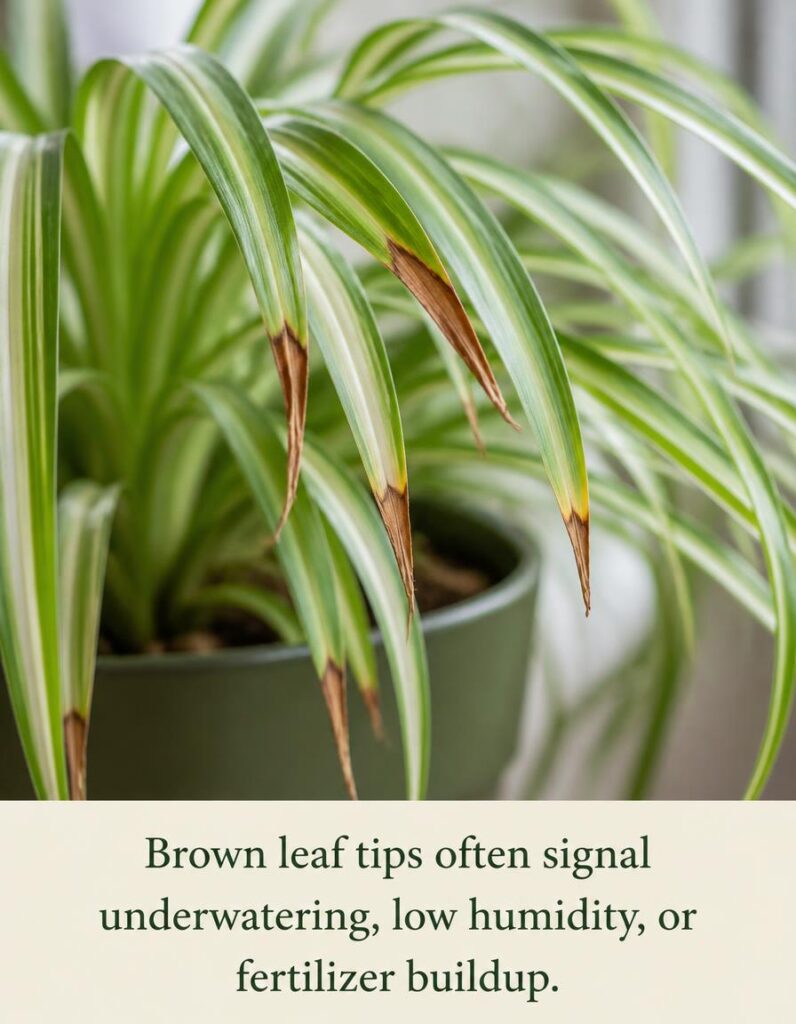
– Brown, crispy leaf tips suggest underwatering or low humidity. [missouribotanicalgarden](https://www.missouribotanicalgarden.org/PlantFinder/PlantFinderDetails.aspx?kempercode=b547)
– Consistently wet soil signals poor drainage or excessive watering. [missouribotanicalgarden](https://www.missouribotanicalgarden.org/PlantFinder/PlantFinderDetails.aspx?kempercode=b547)
6 Light
Provide bright, indirect light for optimal growth. [missouribotanicalgarden](https://www.missouribotanicalgarden.org/PlantFinder/PlantFinderDetails.aspx?kempercode=b547) The plant tolerates lower light but may grow more slowly and produce fewer spiderettes. [theplantindex](https://www.theplantindex.com/plants/spider-plant)
If leaves develop brown patches or fade in color, the plant may be receiving too much direct sun. [theplantindex](https://www.theplantindex.com/plants/spider-plant) Move it to a location with filtered light. [missouribotanicalgarden](https://www.missouribotanicalgarden.org/PlantFinder/PlantFinderDetails.aspx?kempercode=b547)
7 Temperature
Spider plants prefer temperatures between 15–27°C (60–80°F). [missouribotanicalgarden](https://www.missouribotanicalgarden.org/PlantFinder/PlantFinderDetails.aspx?kempercode=b547) They tolerate typical indoor conditions well but should be protected from:
– Cold drafts (below 10°C / 50°F can damage leaves)
– Hot air from heating vents or radiators
– Sudden temperature fluctuations
In warmer climates, the plant can remain outdoors year-round. [missouribotanicalgarden](https://www.missouribotanicalgarden.org/PlantFinder/PlantFinderDetails.aspx?kempercode=b547) In cooler regions, bring it indoors before temperatures drop below 10°C (50°F). [missouribotanicalgarden](https://www.missouribotanicalgarden.org/PlantFinder/PlantFinderDetails.aspx?kempercode=b547)
8 Humidity
Average indoor humidity (40–60%) is sufficient. [missouribotanicalgarden](https://www.missouribotanicalgarden.org/PlantFinder/PlantFinderDetails.aspx?kempercode=b547) The plant tolerates lower humidity but may develop brown leaf tips in very dry conditions. [theplantindex](https://www.theplantindex.com/plants/spider-plant)
To increase humidity:
– Place the pot on a tray filled with pebbles and water (ensure the pot sits on pebbles, not in water)
– Group plants together to create a microclimate
– Use a room humidifier in dry climates or during winter heating
Avoid misting leaves frequently, as this can promote fungal issues without significantly raising humidity. [missouribotanicalgarden](https://www.missouribotanicalgarden.org/PlantFinder/PlantFinderDetails.aspx?kempercode=b547)
9 Fertilization
Feed with a **balanced liquid fertilizer** (such as 10-10-10 or 20-20-20) diluted to half strength. [missouribotanicalgarden](https://www.missouribotanicalgarden.org/PlantFinder/PlantFinderDetails.aspx?kempercode=b547) Apply monthly during the active growing season (spring and summer). [missouribotanicalgarden](https://www.missouribotanicalgarden.org/PlantFinder/PlantFinderDetails.aspx?kempercode=b547)
Reduce or eliminate fertilization in autumn and winter when growth naturally slows. [missouribotanicalgarden](https://www.missouribotanicalgarden.org/PlantFinder/PlantFinderDetails.aspx?kempercode=b547) Over-fertilizing can cause brown leaf tips and salt buildup in the soil. [theplantindex](https://www.theplantindex.com/plants/spider-plant)
10 repoting
Repot every 1–2 years, or when roots begin circling the pot or emerging from drainage holes. [missouribotanicalgarden](https://www.missouribotanicalgarden.org/PlantFinder/PlantFinderDetails.aspx?kempercode=b547) Choose a pot only slightly larger than the current one—spider plants prefer being somewhat root-bound. [missouribotanicalgarden](https://www.missouribotanicalgarden.org/PlantFinder/PlantFinderDetails.aspx?kempercode=b547)
Steps:
1. Water the plant a day before repotting to reduce stress. [missouribotanicalgarden](https://www.missouribotanicalgarden.org/PlantFinder/PlantFinderDetails.aspx?kempercode=b547)
2. Gently remove the plant from its current pot. [plantsandflowersfoundationholland](https://www.plantsandflowersfoundationholland.org/en/indoor-plantguide/spider-plant/)
3. Inspect roots; trim any that are black, mushy, or excessively long. [missouribotanicalgarden](https://www.missouribotanicalgarden.org/PlantFinder/PlantFinderDetails.aspx?kempercode=b547)
4. Place fresh potting mix in the new pot. [plantsandflowersfoundationholland](https://www.plantsandflowersfoundationholland.org/en/indoor-plantguide/spider-plant/)
5. Position the plant at the same depth as before; fill around roots with soil. [plantsandflowersfoundationholland](https://www.plantsandflowersfoundationholland.org/en/indoor-plantguide/spider-plant/)
6. Water thoroughly and place in indirect light for a few days to recover. [missouribotanicalgarden](https://www.missouribotanicalgarden.org/PlantFinder/PlantFinderDetails.aspx?kempercode=b547)
11. Pruning
– Remove dead or damaged leaves at the base using clean, sharp scissors. [missouribotanicalgarden](https://www.missouribotanicalgarden.org/PlantFinder/PlantFinderDetails.aspx kempercode=b547)
– Trim brown leaf tips if desired; cut just enough to remove the brown portion, following the leaf’s natural shape. [theplantindex](https://www.theplantindex.com/plants/spider-plant)
– **Cut back long stems** if the plant becomes too large or leggy. [missouribotanicalgarden](https://www.missouribotanicalgarden.org/PlantFinder/PlantFinderDetails.aspx?kempercode=b547)
Pruning encourages new growth and maintains an attractive shape. [missouribotanicalgarden](https://www.missouribotanicalgarden.org/PlantFinder/PlantFinderDetails.aspx?kempercode=b547) Always use clean tools to prevent disease transmission. [plantsandflowersfoundationholland](https://www.plantsandflowersfoundationholland.org/en/indoor-plantguide/spider-plant/)
12. Propagation
Spider plants are among the easiest houseplants to propagate. [en.wikipedia](https://en.wikipedia.org/wiki/Chlorophytum_comosum) Three methods work well:
Method 1: Rooting Spiderettes While Attached**
1. Identify a healthy spiderette with visible root nodes.
2. Place a small pot of soil near the parent plant.
3. Gently pin the spiderette onto the soil surface (it can remain attached to the parent). [en.wikipedia](https://en.wikipedia.org/wiki/Chlorophytum_comosum)
4. Keep the soil lightly moist. [plantsandflowersfoundationholland](https://www.plantsandflowersfoundationholland.org/en/indoor-plantguide/spider-plant/)
5. After 2–3 weeks, roots should develop; sever the connection to the parent plant. [en.wikipedia](https://en.wikipedia.org/wiki/Chlorophytum_comosum)
Method 2: Rooting Spiderettes in Water**
1. Cut a spiderette from the parent stem using clean scissors.
2. Place the base of the spiderette in a glass or jar of water.
3. Change the water every few days to prevent stagnation. [plantsandflowersfoundationholland](https://www.plantsandflowersfoundationholland.org/en/indoor-plantguide/spider-plant/)
4. Once roots are 2–5 cm (1–2 in) long (typically 2–3 weeks), transplant into soil. [en.wikipedia](https://en.wikipedia.org/wiki/Chlorophytum_comosum)
Method 3: Division
1. Remove a mature plant from its pot. [plantsandflowersfoundationholland](https://www.plantsandflowersfoundationholland.org/en/indoor-plantguide/spider-plant/)
2. Gently separate the root ball into sections, each with several leaves and roots. [missouribotanicalgarden](https://www.missouribotanicalgarden.org/PlantFinder/PlantFinderDetails.aspx?kempercode=b547)
3. Repot each division into its own container. [plantsandflowersfoundationholland](https://www.plantsandflowersfoundationholland.org/en/indoor-plantguide/spider-plant/)
4. Water thoroughly and place in indirect light. [missouribotanicalgarden](https://www.missouribotanicalgarden.org/PlantFinder/PlantFinderDetails.aspx?kempercode=b547)
From Cuttings
1.Select a healthy, non-flowering stem with soft, current-season growth. plantura
2.Cut a 5–8 cm (2–3 inch) section just below a leaf node using clean, sharp scissors or pruners. gardeningknowhow
3.Remove leaves from the lower half of the cutting. gardeningknowhow
4. Optionally dip the cut end in rooting hormone to improve success. bloomingexpert
5.Insert the cutting into a well-draining medium (perlite, coarse sand, or a 50/50 mix of perlite and potting soil). gardeningknowhow
6. Keep the medium lightly moist and place in a warm location with indirect light. gardeningknowhow
7.Roots typically form in 2–4 weeks; transplant into regular potting mix once established. gardeningknowhow
From Division
Choose a mature, healthy plant at least 2 years old. growgreenyard
In spring or autumn, carefully lift the plant from its pot and gently separate the root ball into 2–4 sections, each with roots and stems. agritech.tnau.ac
Replant each division at the same depth it was growing before, water thoroughly, and keep soil lightly moist for 4–6 weeks while roots re-establish. growgreenyard
From Seeds
1.Sow seeds indoors in early spring (February–April) in a shallow tray or small pots. whattoplant
2. Surface-sow or cover very lightly (0–2 mm), as thyme seeds need light to germinate. whattoplant
3. Keep the medium just moist, not wet, and maintain temperatures of 15–20°C (60–68°F). whattoplant
4. Germination typically occurs in 10–21 days. whattoplant
5. Prick out seedlings into individual pots once they develop true leaves, then transplant to final containers when large enough to handle. whattoplant
Silphora Recommendation:
Dilute fertilizer to half the recommended strength and apply monthly during spring and summer only. missouribotanicalgarden
Seasonal Care
Spring
Resume regular watering and fertilization as growth accelerates. missouribotanicalgarden This is an ideal time for repotting and propagation. plantsandflowersfoundationholland
Summer:
Maintain consistent watering; monitor for pests. missouribotanicalgarden The plant may produce abundant spiderettes during this period.
Autumn
Gradually reduce watering and fertilization as growth slows. missouribotanicalgarden Prepare the plant for lower light conditions if moving indoors. missouribotanicalgarden
Winter
Water sparingly; allow soil to dry more between waterings. missouribotanicalgarden Protect from cold drafts and heating vents. missouribotanicalgarden Growth will be minimal but the plant should remain healthy. missouribotanicalgarden
Troubleshooting Table
| Problem | Likely Cause | Solution | Prevention |
|---|---|---|---|
| Yellow leaves | Overwatering; poor drainage | Allow soil to dry; improve drainage; trim affected leaves | Water only when top 2–3 cm of soil is dry; ensure pot has drainage holes missouribotanicalgarden |
| Brown leaf tips | Underwatering; low humidity; fertilizer buildup | Increase watering frequency; raise humidity; flush soil with water | Maintain consistent watering; use diluted fertilizer; consider humidity tray missouribotanicalgarden |
| Root rot | Chronic overwatering; waterlogged soil | Remove plant; trim rotten roots; repot in fresh, well-draining soil | Allow soil to dry between waterings; use pots with drainage missouribotanicalgarden |
| Pests (spider mites, aphids, mealybugs) | Stress; dry conditions; introduction from other plants | Wipe leaves with damp cloth; apply insecticidal soap or neem oil | Inspect new plants; maintain moderate humidity; isolate affected plants missouribotanicalgarden |
| Drooping leaves | Underwatering; root damage | Water thoroughly; check roots for rot | Establish consistent watering routine; avoid letting soil dry completely for extended periods missouribotanicalgarden |
| Slow growth | Insufficient light; low nutrients; root-bound | Move to brighter location; fertilize lightly; consider repotting | Provide bright, indirect light; feed during growing season; repot every 1–2 years missouribotanicalgarden |
| Leggy growth | Too little light | Move to brighter location; prune to encourage bushiness | Ensure plant receives adequate indirect light; rotate pot periodically for even growth missouribotanicalgarden |
| Leaf spots | Fungal infection; water on leaves | Remove affected leaves; improve air circulation; avoid wetting foliage | Water at soil level; ensure good airflow; avoid overcrowding plants missouribotanicalgarden |
| No spiderettes | Immature plant; insufficient light; stress | Allow plant to mature; improve light conditions; reduce stress factors | Provide consistent care; ensure plant is healthy and receiving adequate light missouribotanicalgarden |
| Poor propagation success | Spiderettes too young; improper rooting conditions | Wait until spiderettes have visible root nodes; maintain consistent moisture | Use healthy spiderettes; keep soil lightly moist during rooting; avoid direct sun en.wikipedia |
Silphora tools:
Hanging Planter
Hanging Planter
What it is: A suspended container designed to hold plants, often with chains, ropes, or macramé cords for hanging.
Who needs it: Anyone wanting to maximize vertical space, create visual interest at different heights, or protect the plant from ground-level disturbances. plantsandflowersfoundationholland
What to look for: Sturdy construction; adequate drainage; appropriate size (not too large for the plant); secure hanging mechanism. [plantsandflowersfoundationholland](https://www.plantsandflowersfoundationholland.org/en/indoor-plantguide/spider-plant/)
When it is unnecessary: If you prefer tabletop or shelf placement, or if hanging options are not available in your space. plantsandflowersfoundationholland

- 【7-14 Days Watering-Free】13 inch extra large self watering hanging planters (2 Pack) allow your plants to thrive for 7–1…
Silphora Recommendation :
Choose a hanging planter with a saucer or built-in drainage to catch excess water and protect surfaces. plantsandflowersfoundationholland
Moisture Meter
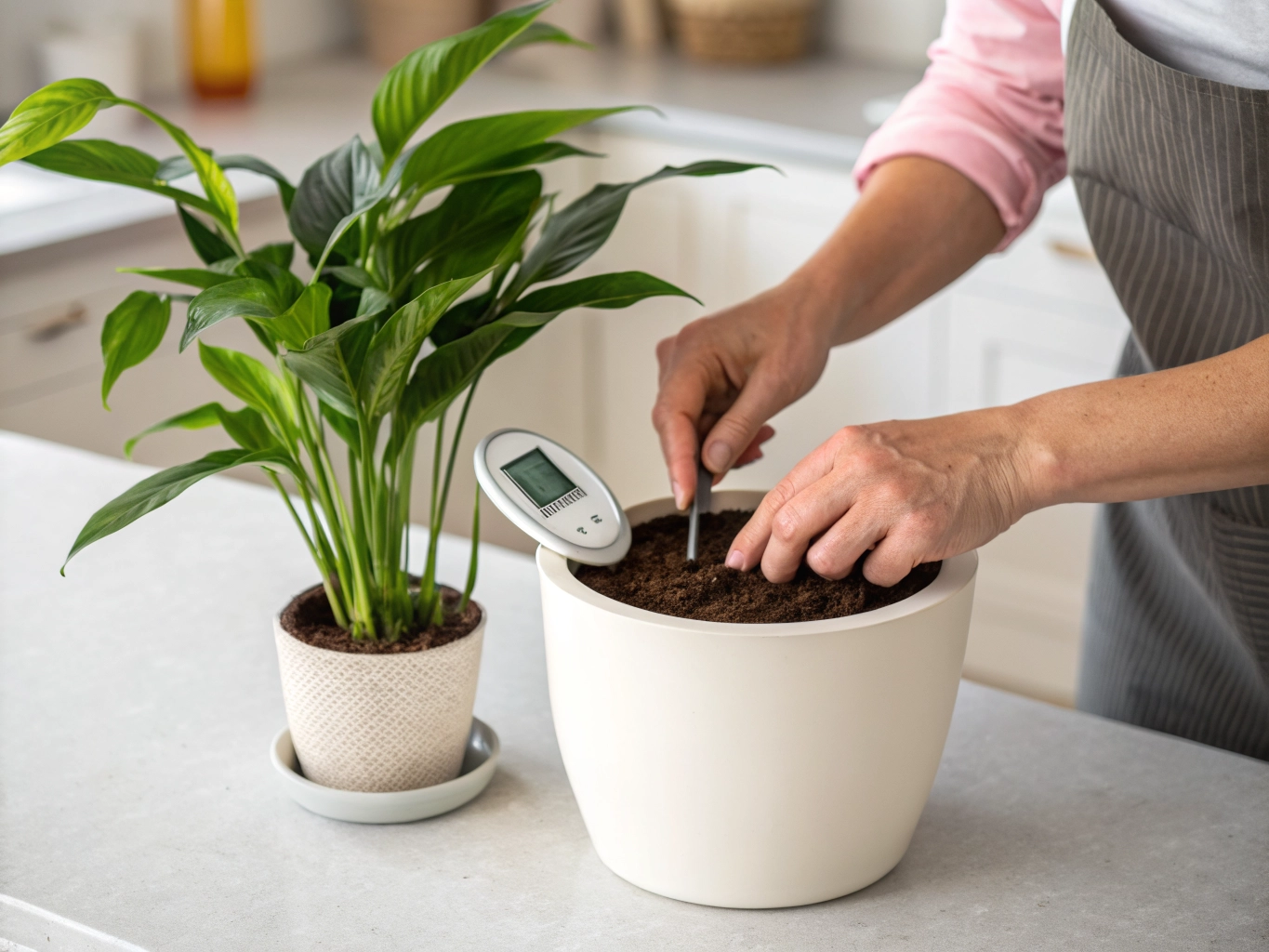
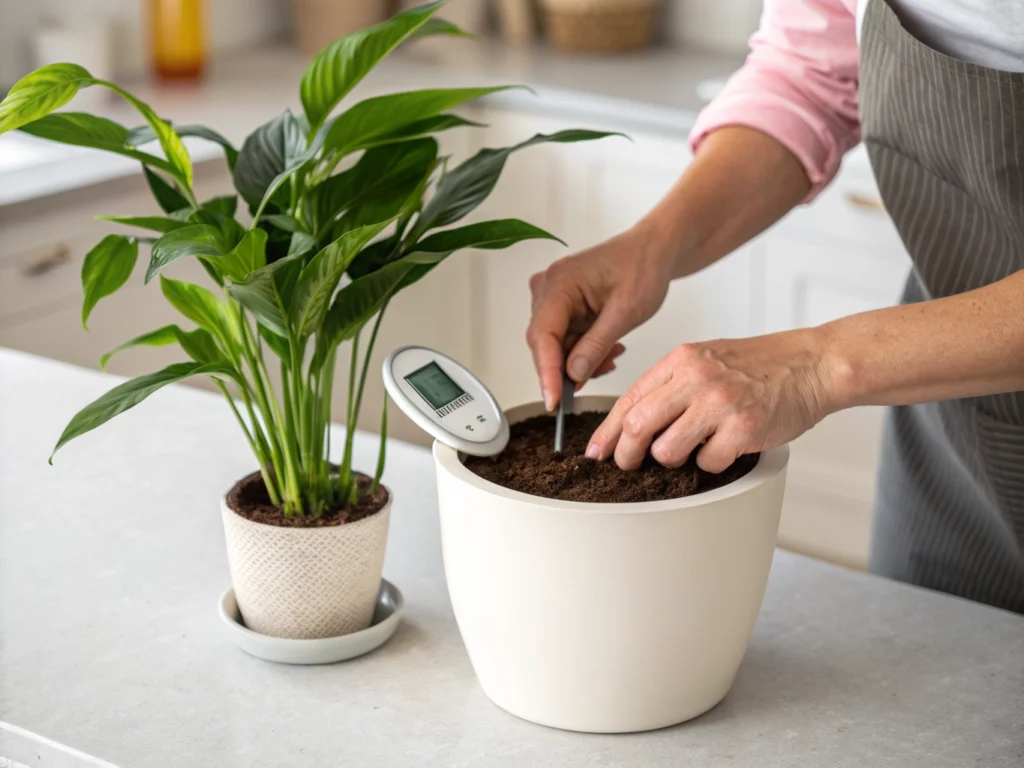
What it is: A handheld device that measures soil moisture levels by inserting a probe into the potting mix. missouribotanicalgarden
Why it helps For beginners who struggle to judge moisture deep inside a large pot, a moisture meter provides objective data about when to water. missouribotanicalgarden It removes guesswork and can prevent both overwatering and underwatering. missouribotanicalgarden
Who needs it: New plant owners; those with large pots where surface dryness does not reflect deeper moisture; anyone who has repeatedly lost plants to watering issues. missouribotanicalgarden
What to look for: Clear, easy-to-read display; durable probe; reliable brand with positive reviews. missouribotanicalgarden
When it is unnecessary: Experienced plant parents who can accurately judge moisture by touch; small pots where the finger-test is reliable. missouribotanicalgarden A moisture meter is not a replacement for observing the plant and checking the soil. missouribotanicalgarden

- 【7-in-1 Features】This is a 7-in-1 multi-function soil tester. Our soil tester quickly measures soil moisture, pH, temper…
- 【Large Screen & LCD Backlight】The Soil Moisture Meter has a large LCD display with white backlight that clearly shows th…
- 【Fast and accurate measurement】With the latest 2025 probe technology, it can quickly and accurately measure soil pH, moi…
Silphora Recommendation :
A basic analog moisture meter is sufficient for most spider plant owners; digital models offer more precision . missouribotanicalgarden
Plant Food
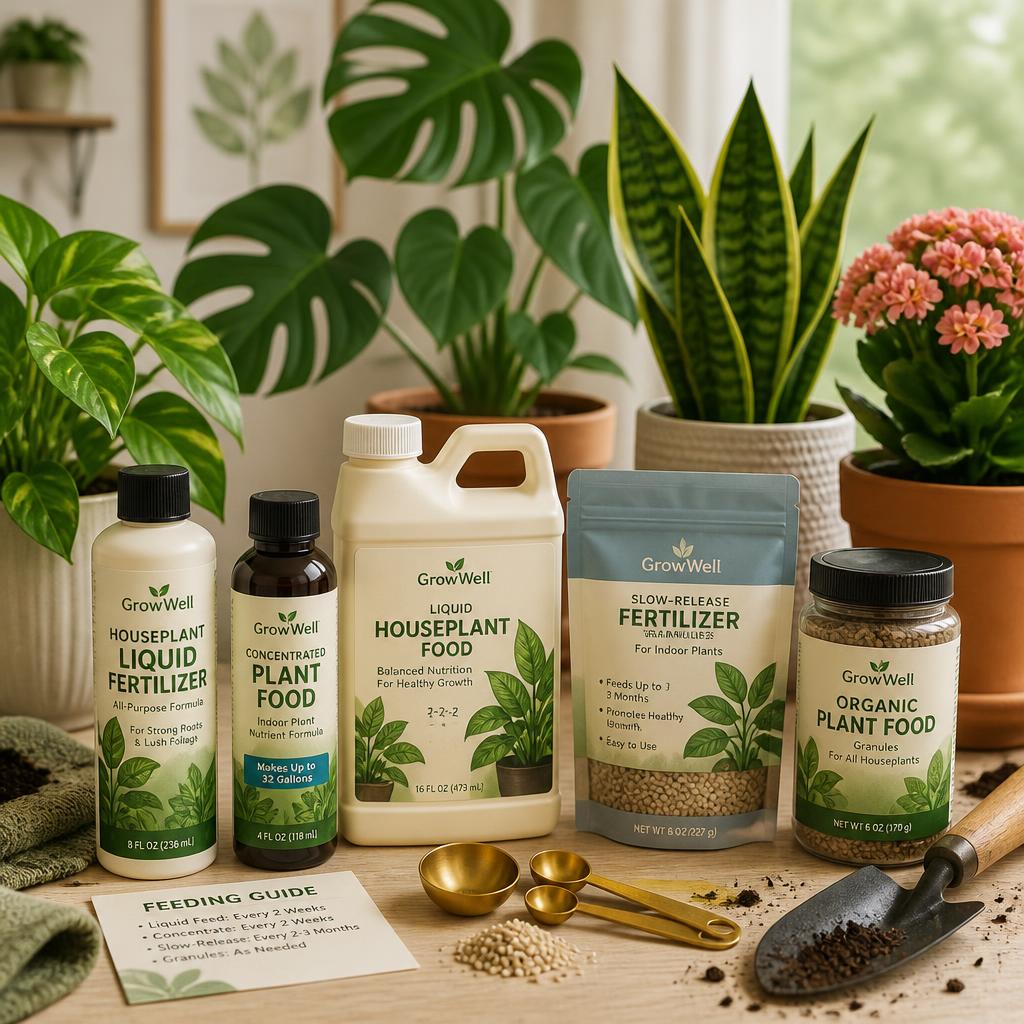
What it is: A balanced liquid fertilizer formulated for houseplants, typically with equal or near-equal ratios of nitrogen, phosphorus, and potassium (such as 10-10-10 or 20-20-20). missouribotanicalgarden
Why it helps: Provides essential nutrients that support healthy growth, vibrant foliage, and spiderette production. missouribotanicalgarden Especially beneficial during the active growing season when the plant’s nutrient demands are highest. missouribotanicalgarden
Who needs it: Anyone wanting to optimize growth; those whose plants show signs of nutrient deficiency (pale leaves, slow growth); owners who repot infrequently (fresh soil provides nutrients, but these deplete over time). missouribotanicalgarden
What to look for: Balanced formula; liquid form for easy dilution; clear instructions for houseplant use; reputable brand. missouribotanicalgarden
When it is unnecessary: If you repot annually with fresh, nutrient-rich potting mix; if your plant is growing satisfactorily without fertilization. missouribotanicalgarden Over-fertilizing can cause more problems than under-fertilizing. theplantindex
Silphora Recommendation :
Dilute fertilizer to half the recommended strength and apply monthly during spring and summer only. missouribotanicalgarden
Propagation Station
What it is: A specialized container or set of vessels designed for rooting plant cuttings or spiderettes, often with individual slots for multiple propagations.
Why it helps: Provides an organized, visible way to root spiderettes in water before transplanting to soil. Clear containers allow you to monitor root development without disturbing the plantlets.
Who needs it: Anyone interested in propagating multiple spiderettes; those who want to share plants with friends; plant enthusiasts who enjoy watching root development. en.wikipedia
When it is unnecessary: If you prefer to root spiderettes directly in soil; if you only propagate occasionally and can use simple jars or glasses.
What to look for: Stable design; adequate space for each spiderette; easy to clean; clear material for visibility.

- Plant Propagation Station: Grow and display your favorite plant cuttings with this tabletop hydroponic planter. Five lar…
- Retro Plant Decor: Featuring a sturdy metal stand and clear glass propagation jars, this minimalist plant holder adds a …
- Indoor Plant Display: Perfect for pothos, monstera, ivy, mint, lucky bamboo, herbs, and other water-rooted plants. Creat…
Silphora Recommendation:
Dilute fertilizer to half the recommended strength and apply monthly during spring and summer only. missouribotanicalgarden
Did You Know?
- The spider plant was first scientifically described in 1794 by Swedish botanist Carl Peter Thunberg, who named it Anthericum comosum before it was reclassified as Chlorophytum comosum. en.wikipedia
- Despite its common name, the spider plant is not closely related to ivy; it belongs to the Asparagaceae family, making it a distant relative of asparagus. en.wikipedia
- NASA’s 1989 Clean Air Study found that spider plants removed up to 95% of formaldehyde from sealed test chambers within 24 hours—one of the highest rates among tested plants. nwf
- Spider plants can produce dozens of spiderettes in a single growing season, each genetically identical to the parent plant. en.wikipedia
- The plant’s thick, tuberous roots function as water-storage organs, an adaptation to the seasonal rainfall patterns of its native Southern African habitat. pza.sanbi
FAQ?
How often should I water my spider plant?
Water when the top 2–3 cm (about 1 in) of soil feels dry to the touch. missouribotanicalgarden This typically means watering every 1–2 weeks during the growing season, less frequently in winter. missouribotanicalgarden Always check soil moisture rather than following a fixed schedule, as watering needs vary with light, temperature, and pot size. missouribotanicalgarden
Why are my spider plant’s leaves turning yellow?
Yellow leaves most commonly indicate overwatering or poor drainage. missouribotanicalgarden Allow the soil to dry more between waterings and ensure the pot has drainage holes. missouribotanicalgarden Trim affected leaves and adjust your watering routine. missouribotanicalgarden If roots are mushy or blackened, root rot may have developed, requiring repotting with fresh soil.missouribotanicalgarden
Can spider plants grow in low light?
Yes, spider plants tolerate low light better than many houseplants, but they grow best in bright, indirect light. missouribotanicalgarden In low light, growth will be slower and variegation may fade. theplantindex If your plant is not producing spiderettes or seems leggy, try moving it to a brighter location. missouribotanicalgarden
Are spider plants safe for pets?
Yes, spider plants are non-toxic to cats, dogs, and humans. pubmed.ncbi.nlm.nih They are among the safest houseplants for households with pets or small children. pubmed.ncbi.nlm.nih However, cats may still chew on the leaves out of curiosity, so hanging the plant may help protect both the plant and your pet. pubmed.ncbi.nlm.nih
How do I propagate a spider plant
The easiest method is to root the spiderettes (plantlets) that grow on the plant’s trailing stems. en.wikipedia You can either pin a spiderette onto soil while it remains attached to the parent, or cut it off and place it in water until roots develop, then transplant to soil. en.wikipedia Both methods are highly successful.
Why does my spider plant have brown tips on the leaves?
Brown leaf tips usually result from underwatering, low humidity, or fertilizer buildup. missouribotanicalgarden Increase watering frequency slightly, raise humidity (using a pebble tray or humidifier), and ensure you are not over-fertilizing. missouribotanicalgarden Trim the brown tips if desired, following the leaf’s natural shape. theplantinde
How big do spider plants get?
Mature spider plants typically reach 30–60 cm (12–24 in) in height and width, with trailing stems extending an additional 60–90 cm (24–36 in). missouribotanicalgarden Size varies with pot size, light, and care—plants in larger pots with optimal conditions grow larger. missouribotanicalgarden
Why isn’t my spider plant producing spiderettes?
Immature plants may not produce spiderettes until they are well-established. missouribotanicalgarden Insufficient light, stress from improper watering, or recent repotting can also delay spiderette production. missouribotanicalgarden Ensure the plant receives bright, indirect light and consistent care; spiderettes should appear when conditions are favorable. missouribotanicalgarden
Can I grow spider plants outdoors?**
Yes, in warm climates (USDA zones 9–11), spider plants can be grown outdoors in shaded or partially shaded locations. missouribotanicalgarden They thrive in containers on patios or in garden beds with well-draining soil. missouribotanicalgarden In cooler regions, bring them indoors before temperatures drop below 10°C (50°F). missouribotanicalgarden
Q: How often should I repot my spider plant?
Repot every 1–2 years, or when roots begin circling the pot or emerging from drainage holes. missouribotanicalgarden Spider plants prefer being slightly root-bound, so choose a pot only 2–5 cm (1–2 in) larger than the current one. missouribotanicalgarden Spring is the best time for repotting. missouribotanicalgarden
What is the best soil for thyme?
Thyme prefers well-draining soil with a sandy or gritty texture. A mix of potting soil, coarse sand or perlite, and optional compost provides appropriate drainage and mild fertility. rhs.org
Do spider plants purify the air?**
Laboratory studies, including NASA’s 1989 research, show that spider plants can remove certain volatile organic compounds (VOCs) like formaldehyde from sealed chambers. ntrs.nasa However, in typical homes with ventilation and air exchange, the effect is modest compared to proper ventilation.alibaba Plants offer psychological and aesthetic benefits, but should not be relied upon as the sole method of air purification. alibaba
Why are my spider plant’s leaves pale or losing variegation?
Insufficient light is the most common cause of faded variegation. theplantindex Move the plant to a brighter location with indirect light. missouribotanicalgarden Also ensure you are not over-fertilizing, as excess nitrogen can promote green growth at the expense of variegation. theplantindex
Conclusion
A plant is never just a plant. [en.wikipedia](https://en.wikipedia.org/wiki/Chlorophytum_comosum) The spider plant sitting on your windowsill today carries within it the memory of Southern African forests, the history of botanical exploration, the preferences of Victorian plant collectors, and the science of modern horticulture. [en.wikipedia](https://en.wikipedia.org/wiki/Chlorophytum_comosum)
Its thick roots remember seasonal rains. [pza.sanbi](https://pza.sanbi.org/chlorophytum-comosum) Its arching leaves recall dappled shade beneath forest canopies. [pza.sanbi](https://pza.sanbi.org/chlorophytum-comosum) Its spiderettes echo a reproductive strategy perfected over millennia—a strategy that now allows it to multiply in homes from Marrakesh to Minneapolis. [en.wikipedia](https://en.wikipedia.org/wiki/Chlorophytum_comosum)
We keep the spider plant not because it is rare, but because it is reliable. [missouribotanicalgarden](https://www.missouribotanicalgarden.org/PlantFinder/PlantFinderDetails.aspx?kempercode=b547) Not because it demands our attention, but because it earns our affection through quiet persistence. [plantsbythere](https://www.plantsbythere.com/lush-by-here/greenhomesthroughtime) In a world of fleeting trends, the spider plant remains—a botanical constant, a living link between wilderness and windowsill, between past and present. [en.wikipedia](https://en.wikipedia.org/wiki/Chlorophytum_comosum)
Perhaps that is why, more than a century after it entered European greenhouses, it continues to thrive in our homes. [livetoplant](https://livetoplant.com/what-is-the-origin-of-spider-plant/) It reminds us that some of the most meaningful relationships are not the most dramatic, but the most enduring. [plantsbythere](https://www.plantsbythere.com/lush-by-here/greenhomesthroughtime)