Mint: The Ancient Herb That Transformed Gardens, Medicine, and Cuisine
Long before mint became a familiar presence in kitchen gardens, teacups, and windowsill pots, its fragrant leaves were already traveling through human history. From ancient Mediterranean gardens to Moroccan mint tea, this vigorous herb has crossed cultures, shaped culinary traditions, and earned a place in everyday life.
Mint remains a popular kitchen herb because its fragrance, culinary range, and long history in traditional medicine make it useful at home. A container can help manage its vigorous growth, while a self-watering system can support steady moisture.
Fresh leaves bring brightness to tea, sauces, salads, and cooked dishes. Self-watering pots, planters can make watering easier to manage, but a contained growing space matters just as much. This article pairs mint’s history and health context with practical growing advice and ways to choose a suitable setup.
Key Takeaways
Mint is a perennial herb with a long culinary and cultural history.
A container helps keep spreading runners within a clear boundary.
Mint prefers consistently moist soil and grows in full sun or partial shade.
A reservoir can supply moisture from below, but it still needs monitoring.
Choose a planter or insert that fits the plant and available space.
A well-chosen container can make room for mint’s abundance without letting it take over the garden.
Where Does Mint’s Long History Begin?
Mint’s written history reaches back to one of the oldest surviving medical texts. The Ebers Papyrus, dated to 1550 BCE, mentions mint as a remedy for stomach pains, showing how early people valued this aromatic plant.
Dried peppermint was found in Egyptian pyramids dating to 1000 BCE. Ancient Greeks used mint for gastrointestinal complaints, added it to baths, and spread it as an air freshener. These practices link the plant’s scent with both daily life and traditional medicine.
Historical use explains mint’s cultural importance, but it does not establish that a remedy works.
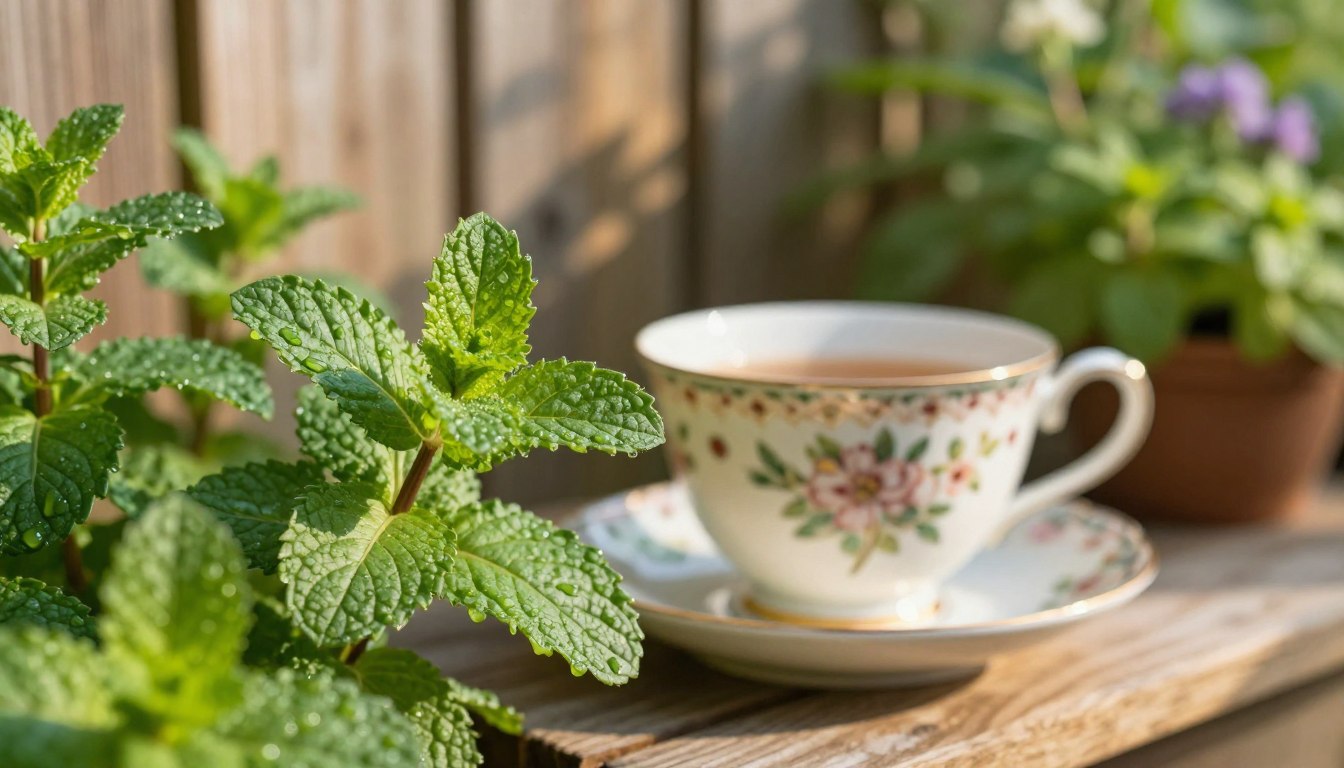
Mint’s culinary history also grows from its strong aroma and adaptable flavor. Leaves can steep in tea or add a cool note to sauces, salads, and cooked foods. Moroccan mint tea is one familiar example of mint’s place in hospitality and everyday drinking. Across generations, cooks have used mint to freshen rich dishes and bring fragrance to simple meals.
Its leaves are easy to dry or use fresh, which helps explain the herb’s lasting presence in home kitchens. Mint is a perennial herb, so it can return year after year in suitable growing conditions. Its established place in traditional medicine reflects a long record of use, not a modern medical conclusion. Its long cultural life explains why mint remains at home in both the kitchen and the garden.
What Does the Evidence Say About Mint for Digestion?
Modern evidence is more specific about peppermint oil than about peppermint leaves. A 2022 review of 10 studies involving 1,030 participants found peppermint oil improved overall irritable bowel syndrome symptoms and abdominal pain compared with placebo.
The review concerned peppermint oil, not mint leaves or tea. Side effects were more common with the oil and mostly mild, including acid reflux and indigestion. The reported result applies to IBS symptoms, not every digestive complaint.
Evidence remains insufficient to determine whether peppermint leaf helps with any health condition. Peppermint leaf is not a proven treatment for digestive disorders. Peppermint tea appears safe, while the long-term safety of consuming large amounts of peppermint leaf remains unknown. Oral peppermint oil can cause heartburn, nausea, abdominal pain, or dry mouth. Rare side effects include allergic reactions. The concentrated oil should not be treated as risk-free simply because mint leaves are a familiar food. Never apply peppermint oil to an infant’s or young child’s face. Inhaled menthol can cause serious side effects in young children, so keep the oil away from their faces. Anyone considering peppermint oil for IBS or another health concern should check with a healthcare professional, especially when a child is involved.
How Can Gardeners Grow Mint in a Container?
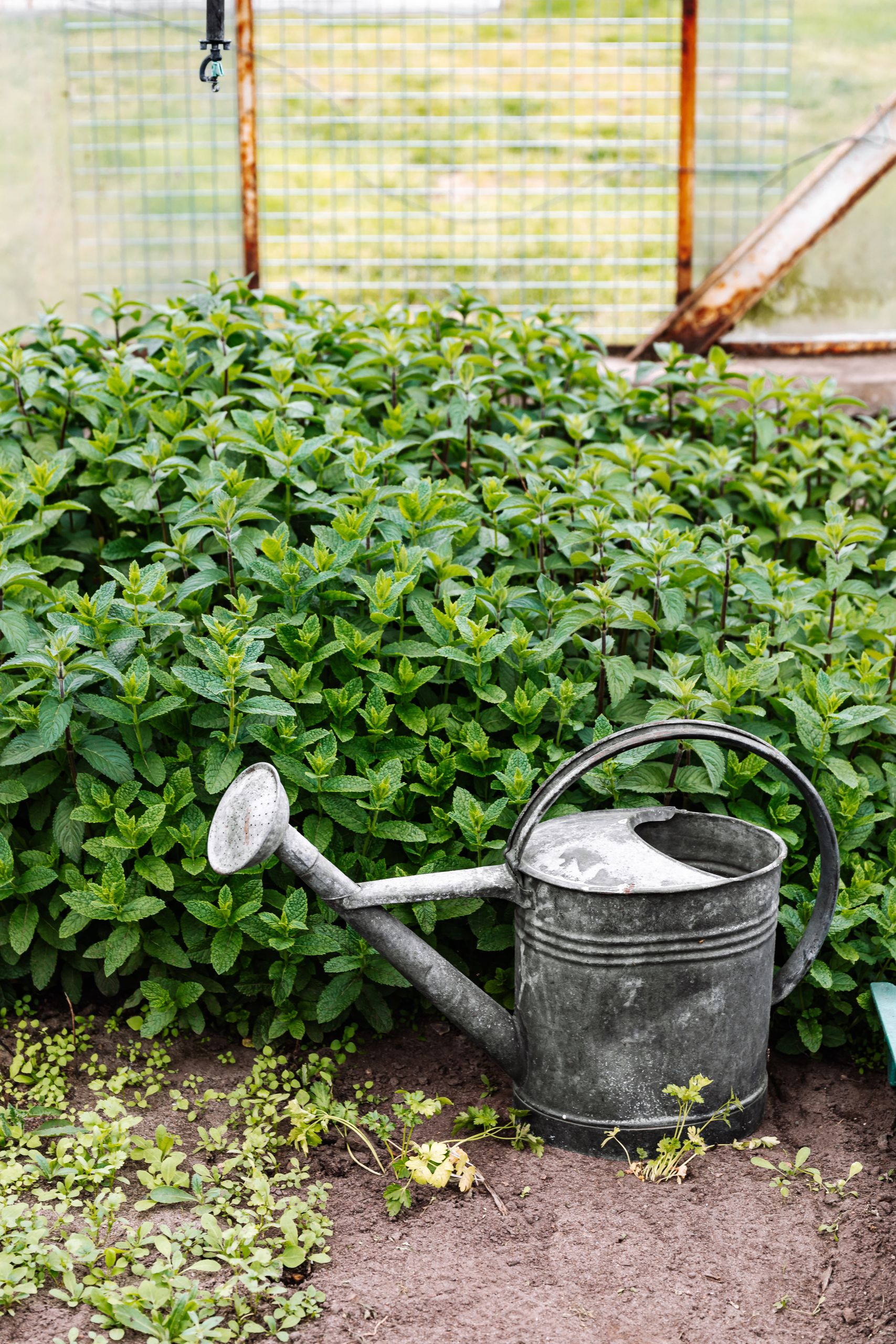
Mint is easier to manage when its roots and runners have a clear boundary. A pot or planter can contain a plant that otherwise spreads through runners above and just below the soil.
A single mint plant can grow on its own in a 10-inch pot. In-ground plants need 18-24 inches of space between them, and their perennial growth makes containment useful beyond one season.
Containing Mint’s Runners
A dedicated container keeps spreading stems within a defined space and makes the plant easier to tend. Choose a pot with drainage holes so excess water can leave, and avoid planting mint directly into a bed unless its spread can be controlled.
One plant in its own pot is a straightforward arrangement. Several plants can share a large planter, but their runners may fill that space quickly. The container should give the plant room without allowing its stems to spread into neighboring beds.
Finding the Right Light and Moisture
Mint grows in full sun or partial shade and prefers consistently moist soil. Four simple checks help keep the plant on track:
Choose a container with drainage holes and enough room for one plant.
Place the pot where it receives full sun or partial shade.
Keep the soil consistently moist.
Check the top inch of soil before watering.
Water when the top inch becomes dry. A planter can dry at different rates in different settings, so use the soil’s condition rather than a fixed calendar as your guide.
In-ground mint plants need 18-24 inches between them to allow for their growth. A single plant in a 10-inch pot offers a smaller footprint and keeps its runners contained.
For a single plant, a dedicated 10-inch pot offers a simple way to keep its runners contained.
How Do Self-watering Pots, Planters Keep Mint Moist?
A self-watering planter draws moisture from a reservoir below the growing medium instead of relying only on water poured over the soil. Many designs hold the planted inner pot above an outer reservoir, with a wick or other porous material connecting them.
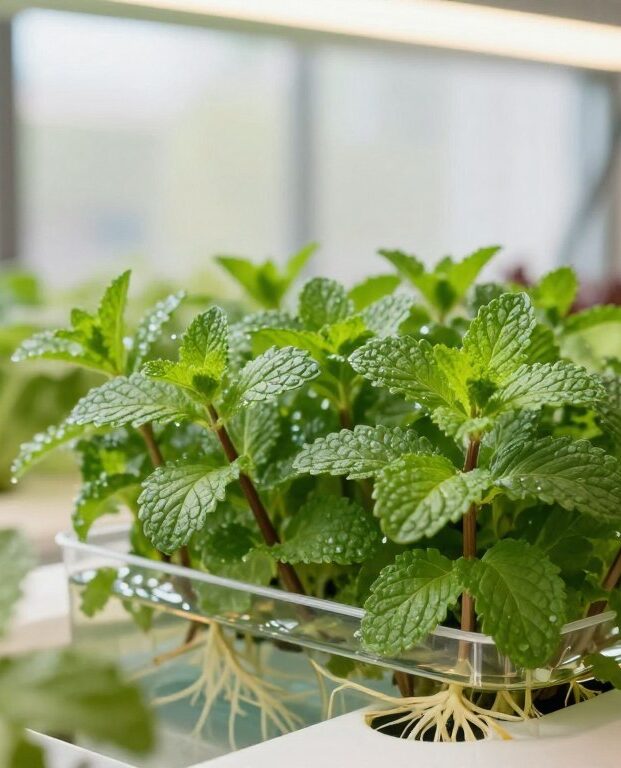
Capillary action is the movement of water through narrow spaces in a porous material, such as a wick or potting mix. As water moves upward, it can reach the roots over time. The system supplies moisture from below, but the reservoir still needs checking and refilling.
The wick draws water from the reservoir into the potting mix. Some planters use another porous medium to move water upward. This slow movement can help provide the consistent moisture mint prefers.
The top of the potting mix may look drier while moisture remains lower in the root zone. A dry surface alone does not show that the roots lack water. This difference is useful to keep in mind when checking a self-watering planter.
A self-watering reservoir for planters can supply water from below, but its capacity and access vary by design. Some have a fill opening or tube, while others require a visual check of the reservoir itself.
“Self-watering” does not mean maintenance-free. Water use changes with the plant and its setting, and the reservoir can run low. A quick check helps prevent an empty reservoir from interrupting moisture delivery.
Treat the reservoir as a source to monitor, not as a reason to stop checking the plant.
Which Features Matter When Choosing a Self-watering Planter?
The first choice is whether to replace a favorite pot or add a watering system inside it. Full planters have an integrated reservoir, while an insert fits inside an existing pot.
For indoor use, self-watering pots and planters should fit a windowsill or shelf. Outdoor self-watering pots and planters need to suit the site and its exposure. Extra-large outdoor planters suit substantial spaces and established plantings, not automatically one mint plant.
Choose a Full Planter or an Insert
A full planter replaces the existing pot and combines the planting space with its reservoir. A self-watering insert sits inside a planter the gardener already owns. TruDrop Flex inserts come in 15-inch, 18-inch, and 22-inch sizes, giving gardeners three options for matching a pot.
The insert’s main advantage is preserving a favorite container. It works only when the insert fits the planter’s usable interior and leaves room to reach its fill point.
Format
How it fits
Water access
Useful check
Full planter
Integrated outer reservoir
Fill through a reservoir opening
Check reservoir access and indicator availability
Insert
Fits an existing pot
Insert fill tube
Check reservoir access and indicator availability
DIY reservoir planter
Constructed inside a closed-bottom container
DIY pipe
Check reservoir access and indicator availability
Match Reservoir Size to the Plant and Setting
A larger reservoir can hold more water, but it also takes space and adds weight when filled. Choose a planter that suits the plant and the room or outdoor site, rather than choosing the largest available size by default.
Extra-large self-watering outdoor planters can serve substantial spaces or established plantings. For one mint plant, a smaller contained pot may be easier to place and manage.
Check the Fill Point and Water-Level Indicator
A fill tube lets water enter the reservoir without pouring it over the potting mix. Some designs also have a water-level indicator; others require a visual check. These features can make it easier to see when the reservoir needs attention.
Measure the planter’s usable interior, including its width and depth.
Check that the fill point remains reachable after planting.
Look for a water-level indicator if visual reservoir checks are inconvenient.
Measure the planter’s usable interior and fill access before choosing an insert.
Which Self-watering Planters and Inserts Suit Mint Best?
For gardeners who already own a mint-sized planter, an insert can be the most direct route to bottom watering. The Gardeners.com Adjustable Self-Watering Insert is a practical candidate when its adjustable size fits the existing container.
Its length adjusts from 8 to 15.75 inches, and its reservoir holds 1-1/2 quarts when fully compressed or up to 5 quarts when fully extended. Fit the insert to the planter’s interior before choosing it.
Product
Size
Reservoir or watering feature
Useful consideration
Gardeners.com Adjustable Self-Watering Insert
8-15.75 inches long
Reservoir, fill tube, water-level indicator, capillary strip
Capacity ranges from 1-1/2 to 5 quarts
TruDrop Flex
15, 18, or 22 inches
Self-watering insert
Three size options
Gardenix Decor
7 inches wide
Water-level indicator, coco coir
Sold in a 3-pack
Bloem Ariana
6.5 inches wide
Wicking disk
No water-level indicator
Lechuza Balconera
7.5 inches wide
Includes substrate
Balcony brackets sold separately
The Gardeners.com insert adjusts from 8 to 15.75 inches long. Its reservoir is 7 inches wide and 4.5 inches high, and its fill tube adjusts from 11.5 to 22 inches high. A capillary strip carries moisture from the reservoir into the growing area.
Gardenix Decor pots and Bloem Ariana planters are small-format examples for indoor herb growing. Gardenix Decor comes as a three-pack with a water-level indicator and coco coir. Bloem Ariana uses a wicking disk and has no water-level indicator.
Lechuza Balconera is 7.5 inches wide and includes substrate. Its balcony brackets must be purchased separately, so include that hardware in the plan for a railing setup.
TruDrop Flex offers 15-inch, 18-inch, and 22-inch insert sizes. Self-watering pots and planters for indoor plants should be sized to the herb and the available space, not selected only for appearance.
For a specific larger existing planter, the Gardeners.com insert’s adjustable dimensions and fill tube offer a defined fit to compare. Confirm the planter’s interior dimensions and the insert’s fit before committing to a setup.
How Can a Gardener Build a DIY Self-watering Planter?
A DIY planter creates a hidden water chamber inside a container that would otherwise need frequent top watering. A closed-bottom plastic container can hold the reservoir beneath a raised planting area.
A 40-liter (10.5-gallon) garden tub can use about one-quarter to one-third of its volume for the reservoir. That extra-large DIY self-watering planter can be made to the container’s dimensions, but it may be unnecessarily large for one mint plant.
Assemble the Reservoir and Fill Pipe
Gather five materials before starting the build:
Closed-bottom container
Perforated inner pot
Perforated drain supports
Landscaping fabric
PVC fill pipe
For the garden-tub example, use a PVC pipe 1 inch in diameter. Cut it 1-2 inches taller than the container so its top remains accessible for filling.
Set the supports inside the container to hold the perforated inner pot above the bottom. This space becomes the reservoir. Put a heavy, filled container in its permanent spot before adding water and potting mix.
Add the Wick Zone and Potting Mix
The perforated inner pot creates a zone where water can reach the potting mix from below. Line the planting area with landscaping fabric to separate most of the mix from the reservoir while allowing moisture to pass through.
Use a soil-less potting mix, not dense garden soil. Dense soil can pack into the planting area and interfere with water movement. Add the potting mix above the fabric, leaving the fill pipe clear.
A roomy tub can accommodate a sizable planting, but mint’s runners still need a defined boundary. Choose a container with a practical footprint rather than building extra capacity that one plant will not use.
Keep the fabric barrier intact so loose potting mix does not fall into the reservoir.
How Should a Self-watering Planter Be Set Up and Maintained?
The first watering should help the potting mix settle around the roots before the reservoir takes over routine moisture delivery. Set the plant into the mix, fill around its roots, and water lightly from above.
Once the plant is settled, fill the reservoir through the planter’s designed access point. Use the overflow hole for the DIY tub, but follow the fill tube and indicator on a ready-made planter.
Settle the Plant Into the Potting Mix
Position the plant so its roots sit within the potting mix, then gently firm the mix around them. A light top watering helps settle the mix without making the reservoir the only source of water during setup.
For the DIY garden-tub example, pour water through the PVC pipe until water exits the overflow hole. A commercial planter may instead have a fill tube and water-level indicator, which guide filling without the DIY overflow method.
Refill According to Use and Conditions
The large DIY garden-tub example may need a refill about once a week in summer. Treat that timing as a starting estimate for that container, not a fixed schedule for every pot.
Temperature and plant use change how quickly a reservoir empties. Warm conditions and active growth can use water faster, while cooler conditions can slow that demand. Check the planter’s fill method to keep track of its supply.
Keep Fertilizer Out of the Reservoir
Fresh potting mix and a young plant may not need fertilizer at first. After a couple of months, a boost can be considered if the plant’s growth calls for it.
Apply water-soluble fertilizer to the potting mix rather than pouring it into the reservoir. This keeps soluble feed out of the water chamber and lets it reach the growing medium through the usual watering process.
Refill based on the indicator or the planter’s fill method, then adjust the interval to the plant’s actual use.
What Problems Can a Self-watering Planter Cause?
A reservoir helps only when its moisture delivery matches the plant and the potting mix. Excess water or moisture-retentive mix can waterlog roots and contribute to root rot.
Stop continuous reservoir supply if the mix stays saturated. Cacti and snake plants generally need soil to dry between waterings, so they are poor candidates for a constantly moist reservoir unless grown in an appropriate hydroponic or semi-hydroponic setup.
Problem
Why it happens
Practical response
Waterlogged roots
Excess water or moisture-retentive mix
Reduce supply and check drainage holes
Stagnant water and mosquitoes
Water sits in the reservoir
Empty stagnant water and keep the reservoir maintained
Dry-soil plant in a moist setup
Plant prefers drying between waterings
Use a different watering system
Cacti and snake plants are poor matches for a continuously moist reservoir unless the setup is designed for hydroponic or semi-hydroponic growing.
If the mix remains saturated or the plant prefers full drying, stop keeping the reservoir continuously supplied.
Conclusion
Mint is an enduring kitchen herb, but a little planning makes it easier to grow well at home. Its runners can spread beyond their welcome, while a contained pot gives the plant a defined place to grow.
A reservoir system can make moisture delivery more convenient, but it still needs occasional attention. The best setup is one that fits the plant, the planter, and the gardener’s ability to check the water supply.
For one plant, choose a dedicated container; if a favorite planter is already on hand, measure its usable interior and compare it with an insert’s dimensions. That small check can prevent an awkward fit and keep the growing space practical.
Measure the pot you already own, then choose a contained setup that lets mint thrive without letting its runners roam.
FAQ
Can mint grow in a self-watering planter?
Yes, mint can grow in a self-watering planter if the potting mix does not leave its roots waterlogged. The container also gives the plant’s spreading runners a boundary. Choose a planter with a suitable reservoir and a potting mix that allows water to move without staying saturated. Check the plant and reservoir during routine care instead of assuming the system needs no attention.
How much water does mint need in a pot?
Keep the soil consistently moist, and water when the top inch becomes dry. The amount a pot needs changes with its light, heat, and growing conditions. A self-watering system can supply moisture from below, but the reservoir still needs monitoring. Use the soil and reservoir as practical checks, rather than following the same watering schedule in every season or setting.
Can several mint plants share one large planter?
Yes, several mint plants can share a large planter, but their runners spread vigorously and may fill the space. One plant in its own container is the simplest way to contain that growth. If planting more than one together, choose a planter with enough room and keep an eye on how quickly the plants occupy it. A larger container does not stop mint from spreading within its boundaries.
Are self-watering inserts better than full self-watering pots?
Neither format is always better: an insert preserves a planter already in use, while a full pot has an integrated reservoir. The practical choice depends on the existing pot’s interior size and how easily the reservoir can be filled. Compare those details before deciding. An insert that does not fit or leaves its fill point blocked will not work well in that planter.
Can an outdoor self-watering planter stay outside in the rain?
Yes, an outdoor self-watering planter can stay outside in rain when excess water has a way to escape and the reservoir can overflow safely. Rain can add water beyond what the reservoir alone supplies, so the planter’s drainage matters. Check that water does not leave the roots in saturated potting mix. The planter’s construction and the exposure of its location affect how it handles rain.
Is peppermint oil the same as peppermint leaf for digestive health?
No, peppermint oil and peppermint leaf are not the same evidence-wise. A 2022 review found peppermint oil better than placebo for overall IBS symptoms and abdominal pain, while evidence remains insufficient to determine whether peppermint leaf helps any health condition. The oil can cause side effects, so it should not be treated as risk-free. A healthcare professional can advise on its use for a health concern.
Indoor garden How to Successfully Grow Rosemary Indoors in Pots How to Grow Rosemary Indoors: Essential Tips for Thriving Plants in Pots opening story In early modern England, rosemary was more than a fragrant sprig: people used it at weddings and funerals as a symbol of remembrance and fidelity. Shakespeare gave the herb a place…
Opening Story In the dry-season light of tropical West Africa, a snake plant does not look like a plant designed for comfort. Its leaves rise from the ground in rigid green blades, patterned in irregular bands and edged, in some cultivated forms, with yellow. Around it, the soil may be thin, the rain intermittent, and…
herb garden Parsley: From Ancient Mediterranean Traditions to the Everyday Herb Garden Parsley is a Mediterranean herb whose story reaches from ancient traditions to the everyday kitchen and garden. Parsley is a Mediterranean herb whose story reaches from ancient traditions to the everyday kitchen and garden. It suits home gardeners who want a useful plant…
Imagine stepping into your kitchen and plucking vibrant, aromatic leaves for your favorite recipes. Starting a small garden inside your home is a rewarding journey that brings nature right to your countertop. You no longer need to rely on store-bought plastic containers that lose their zest within days. By cultivating your own plants, you bypass…
Opening Story Long before it appeared beneath the soft light of a modern kitchen window, the spider plant belonged to a very different world. en.wikipedia In the shaded understory of South African forests, where dappled sunlight filtered through river-valley canopies and mist clung to rocky embankments, Chlorophytum comosum grew quietly as ground cover, its arching…
The History and Folklore of Rosemary Rosemary has been growing beside Mediterranean paths, walls, and shorelines for thousands of years. Its evergreen branches, sharp fragrance, and blue flowers made it useful long before it became a familiar kitchen herb—and those The History and Folklore of Rosemary Rosemary has been growing beside Mediterranean paths, walls, and…