

Learning how to grow vegetables at home requires matching plant growth habits to available sunlight, drainage, and container capacity. Fresh edible harvests flourish on sunny windowsills, narrow apartment balconies, sheltered suburban patios, or compact backyard raised beds when crops receive appropriate root volume and consistent hydration. Leafy greens, compact nightshades, climbing legumes, and shallow-rooted alliums offer continuous yields without requiring open farm acreage.
Environmental conditions dictate which crops thrive in a specific home setting. Fruiting crops require sustained direct sun and root space, whereas cool-season greens tolerate partial shade and shallow soil depths. Selecting suitable cultivars and managing moisture balance transforms modest living areas into resilient food-producing microclimates.
Historical Foundations of Household Food Cultivation
Domestic food production remains an enduring human adaptation across millennia of urban development. Ancient Roman insulae featured terracotta window boxes filled with leeks, herbs, and radishes, bringing fresh harvest to dense multi-story city blocks. Medieval European cottage dwellers cultivated enclosed potagers, interplanting cabbages, legumes, and medicinal aromatics right outside kitchen doorways to feed households through changing seasons.
During nineteenth-century industrialization, European allotment gardens arose to secure nutritional sovereignty for factory laborers working in confined neighborhoods. Urban expansion throughout the twentieth century saw the rapid spread of American and British victory gardens, which generated substantial proportions of domestic fresh produce from residential yards and vacant lots. Contemporary home vegetable gardening revives these resource-efficient traditions through lightweight potting media, vertical structures, and selective plant breeding.
Historical kitchen gardens prioritized varieties that offered staggered harvesting over single-day yields. Modern home cultivators echo this heritage by choosing cut-and-come-again leaves and dwarf bush cultivars that maximize prolonged utility in compact environments.

Compact Greens and Quick Roots: Lettuce, Radishes, and Cherry Tomatoes
Cultivating fast-growing edible species establishes immediate domestic productivity while building foundational horticultural observation habits. Leafy salads, rapid taproots, and dwarf fruiting vines represent three accessible entry points for container vegetable gardening.

Lettuce (Lactuca sativa)
Lettuce is a tender annual Asteraceae family crop celebrated for compact foliage and rapid leaf renewal. Looseleaf and butterhead selections excel in shallow containers, making lettuce ideal for windowsill boxes and shaded balconies where deeper root crops struggle. Recommended cultivars for modest footprints include ‘Tom Thumb’, ‘Little Gem’, and ‘Black Seeded Simpson’, each forming tight rosettes of crisp leaves.
Lettuce performs best in cool conditions under moderate sunlight, requiring fertile growing media that stays evenly moist. Sow seeds near the soil surface and harvest outer leaves progressively as needed, allowing the central crown to produce new foliage across several cycles. High heat prompts rapid bolting and bitter sap production, making midsummer unshaded balconies unsuitable without shade cloth protection.

Radishes (Raphanus sativus)
Belonging to the Brassicaceae family, the domestic radish develops swollen, crisp hypocotyls within a remarkably compressed life cycle. Radishes represent one of the fastest edible crops available, providing swift feedback for beginning cultivators and maximizing spatial turnaround. Compact round varieties such as ‘Cherry Belle’, ‘French Breakfast’, and ‘Champion’ develop uniform roots in containers of moderate depth.
These root vegetables prefer full sunlight and loose, stone-free potting soil that allows unrestricted expansion. Irrigate consistently to preserve crisp texture, as erratic watering leads to split flesh or unpalatably pungent roots. Thin emerging seedlings early to prevent overcrowding, and avoid hot midsummer planting windows that trigger premature flowering rather than bulb swelling.

Cherry Tomatoes (Solanum lycopersicum var. cerasiforme)
Cherry tomatoes are warm-season solanaceous perennials cultivated as vigorous annuals known for abundant sweet clusters. Determinate and dwarf selections thrive in medium containers, offering substantial yields from vertical patio footprints. Suitable dwarf varieties including ‘Tiny Tim’, ‘Micro Tom’, and ‘Patio Choice’ remain naturally compact without exceeding structural support boundaries.
Fruiting demands uninhibited direct sunlight and deep, nutrient-dense growing media enriched with organic amendments. Maintain regular watering schedules to prevent blossom end rot and skin splitting as fruit clusters mature. These warm-climate crops remain entirely unsuitable for cold, low-light indoor windowsills unless supported by supplemental artificial lighting fixtures.
Container Advantages
- Rapid turnover allows multiple successive plantings throughout the growing season.
- Shallow root architectures adapt easily to standard balcony troughs and window boxes.
- Compact growth habits minimize staking requirements in tight urban spaces.
Environmental Limits
- High ambient heat triggers bolting in tender salad greens.
- Fruiting tomatoes require high light levels unavailable in interior rooms without lamps.
- Erratic moisture levels quickly spoil root formation and cause fruit splitting.
Foundational Cultivation Equipment
Launching a productive vegetable garden in limited square footage requires reliable hardware that manages root volume, moisture retention, and seed germination. The following equipment selections address core structural challenges faced by home growers.

Keter Urban Bloomer Raised Garden Bed
The Keter Urban Bloomer elevated planter provides dedicated soil capacity with an integrated water reservoir and drainage indicator. This system solves root confinement issues on paved surfaces by lifting crops to comfortable working heights while buffering against rapid summer moisture loss.
- Features an internal water gauge and drainage valve to prevent waterlogged root zones.
- Ergonomic height prevents soil compaction and reduces pest intrusion from ground level.
- Requires adequate floor space, making the unit less practical for extremely narrow walkways.
- Suits patio, deck, and large balcony growers needing reliable moisture control.
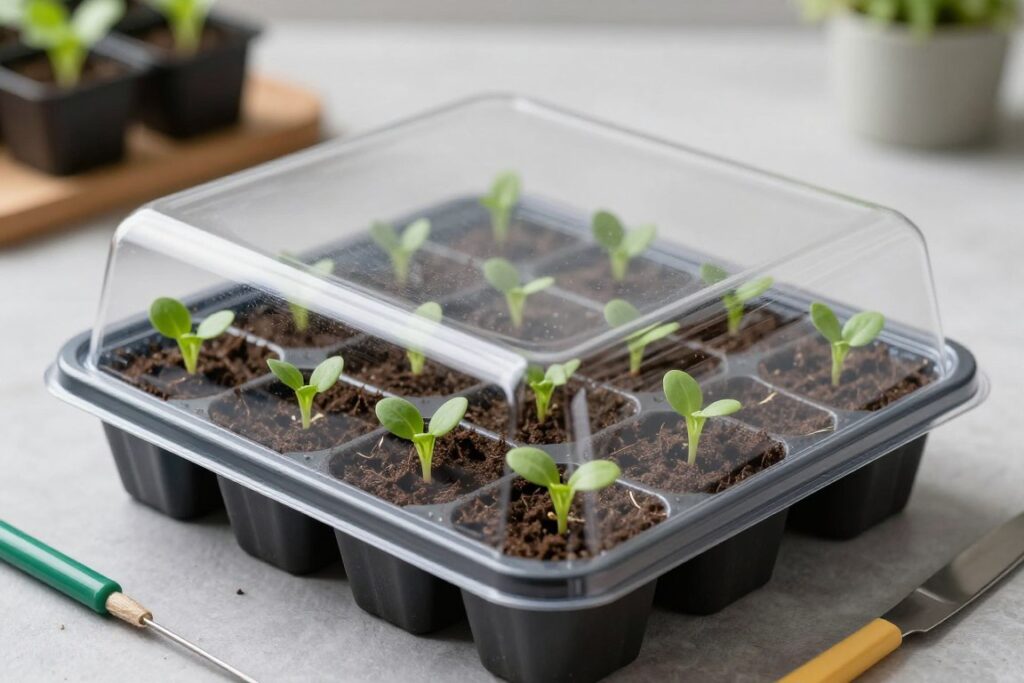
Burpee Organic Vegetable Seed Starter Kit
The Burpee Organic Vegetable Seed Starter Kit combines self-watering propagation cells with biodegradable expanding pellets for uniform seedling establishment. It eliminates germination failure caused by irregular manual misting or dense garden dirt in early stages.
- Self-watering mat delivers sub-irrigation to delicate root radicles without disturbing surface soil.
- Expanding pellets provide an airy medium that promotes rapid lateral root branched growth.
- Seedlings must be transplanted quickly once true leaves develop to avoid nutritional stalling.
- Ideal for beginners starting early greens, nightshades, and brassicas indoors before seasonal warm weather.
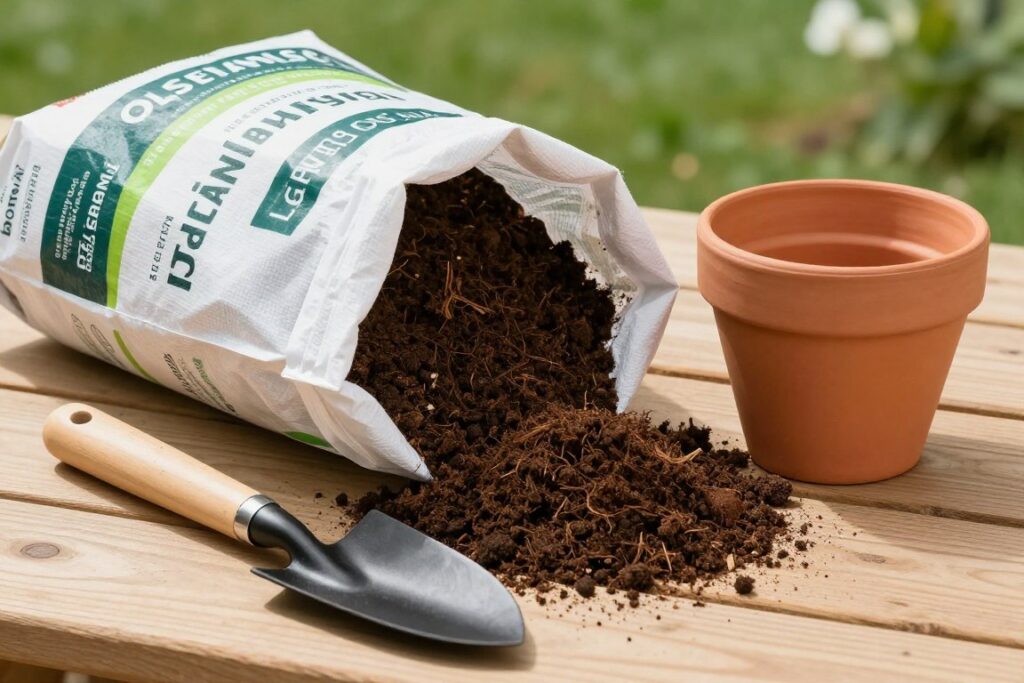
Espoma Organic Potting Soil Mix
Espoma Organic Potting Soil Mix supplies an airy blend of sphagnum peat moss, perlite, and mycorrhizal fungi designed specifically for potted vegetable containers. It resolves the suffocating density and poor drainage common when native garden soil is placed in enclosed containers.
- Mycorrhizal inoculation enhances root nutrient uptake and promotes drought resilience.
- Perlite channels surplus water away rapidly while maintaining vital subterranean oxygen pockets.
- Requires supplemental nutrient feeding as crops enter vigorous vegetative and fruiting phases.
- Essential for all container vegetable gardening on balconies, windowsills, and raised beds.
Hardy Leaves, Alliums, and Solanaceous Fruits: Spinach, Scallions, and Peppers
Expanding the domestic crop selection introduces varied nutritional profiles, growth forms, and temperature tolerances. Combining cold-tolerant greens, perennial alliums, and heat-loving nightshades enables productive year-round harvesting across changing seasons.

Spinach (Spinacia oleracea)
Spinach is a cool-season Amaranthaceae family green prized for iron-dense, deeply pigmented foliage. It thrives in compact growing environments, tolerating lower ambient light levels than fruiting crops while generating substantial nutritional returns. Compact cultivars such as ‘Bloomsdale Long Standing’, ‘Space’, and ‘Baby’s Leaf’ provide high leaf density in shallow planters.
Spinach requires well-drained potting compost and steady moisture to prevent premature seed stalk emergence. Morning sun with afternoon shade protects foliage quality and extends vegetative harvests into early summer. Extreme heat rapidly terminates production, making sheltered, cool exposures far superior to unshaded, south-facing brick walls.

Green Onions (Allium fistulosum)
Green onions, or scallions, are resilient alliums that produce flavorful tubular foliage from minimal root footprints. Their vertical, slender growth habit makes them exceptionally well suited for interplanting within window boxes or filling narrow container margins. Reliable selections including ‘Tokyo Long White’ and ‘Evergreen Hardy White’ adapt across diverse domestic microclimates.
Scallions tolerate moderate sun and demand only modest potting depths to thrive. Plant seeds or rooted kitchen bulb bases closely in loose soil, trimming green hollow scapes above the soil line for perpetual regrowth throughout the year. They adapt indoors better than most vegetables, provided the growing medium drains excess moisture freely away from basal plates.

Peppers (Capsicum annuum)
Peppers are warm-climate solanaceous shrubs producing vibrant sweet or pungent pods from modest container footprints. Both sweet mini-bells and compact hot chiles thrive in containers, where restricted root space often encourages concentrated fruit sets. Excellent small-space cultivars include ‘Mohawk’, ‘Redskin’, ‘Cayennetta’, and ‘Early Jalapeno’.
Peppers demand full daily exposure to strong sunlight, high ambient warmth, and warm soil conditions to set fruit reliably. Allow the top layer of potting mix to dry slightly between deep watering sessions to protect delicate root hairs. Cool drafts, shade, and excessive nitrogen feeding cause blossom drop without fruit development, requiring sheltered outdoor or south-facing placements.
Regenerating green onions from trimmed culinary cuttings offers continuous indoor aromatics. Submerge root bases in water until fresh white roots form, then transfer directly into porous potting soil to prevent waterborne rot.
Space-Efficient Vertical and Self-Watering Systems
Vertical cultivation hardware maximizes spatial capacity by utilizing vertical air space above decks, patios, and balcony railings. These targeted systems preserve floor clearance while supporting demanding vegetables.

GreenStalk Patented Vertical Planter
The GreenStalk Vertical Planter stacks multiple tiers of planting pockets over a single compact footprint, utilizing a patented central gravity-fed water reservoir. It solves spatial congestion by converting horizontal square footage into vertical growing area suitable for greens, alliums, and compact bush vegetables.
- Central watering reservoir distributes hydration evenly through interior channels to every level.
- High-grade UV-resistant food-safe resin resists cracking under intense outdoor solar radiation.
- Weighs considerably when filled with moist potting soil, requiring careful balcony load assessment.
- Suits urban patio and balcony gardeners looking to produce substantial yields within minimal floor boundaries.
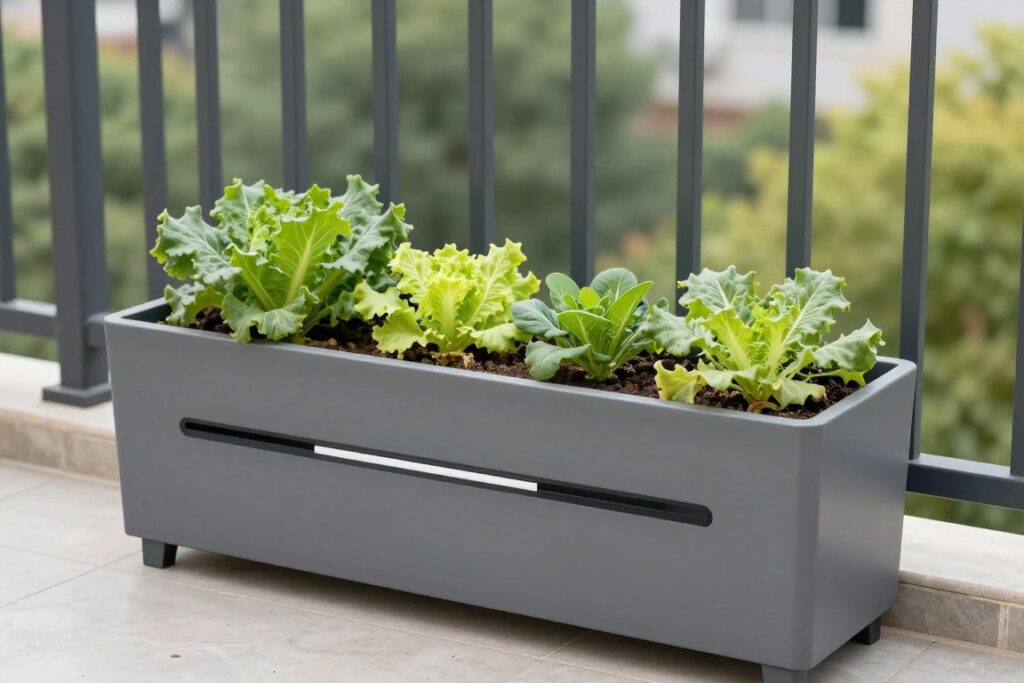
Lechuza Balconera Self-Watering Planter
The Lechuza Balconera planter features a sub-irrigation reservoir that supplies bottom-up capillary moisture directly to root systems. It overcomes rapid container desiccation caused by urban wind currents and reflective exterior wall surfaces.
- Integrated water level indicator provides unambiguous notification when water reserves require replenishment.
- Sub-irrigation design shields upper soil surfaces from weed seed establishment and fungus gnat pressure.
- Drain plug must be removed outdoors to permit natural discharge of surplus rainwater during storms.
- Suits apartment balcony railings and windowsill perches exposed to drying wind and direct sun.

K-Brands Tomato Cage Plant Support Trellis
The K-Brands Tomato Cage system utilizes modular snap-on steel stakes that reconfigure to match shifting plant architectures as branches expand. It prevents mechanical stem breakage and fruit rot by keeping heavy solanaceous and cucurbit stems cleanly elevated above damp soil.
- Rust-proof plastic-coated steel cores deliver dependable structural rigidity against outdoor wind gusts.
- Modular crossbars adjust upward and outward as crops increase in vegetative biomass.
- Requires anchoring deep into container soil to prevent top-heavy tipping in strong winds.
- Ideal for container tomatoes, peppers, eggplants, and vining beans on patios and terraces.
Productive Vines, Taproots, and Culinary Aromatics: Beans, Carrots, Cucumbers, and Basil
Expanding the home plot into climbing legumes, root crops, vining cucurbits, and aromatic herbs diversifies culinary output while optimizing spatial layering. Managing container depths and vertical supports permits heavy producers to thrive in small footprints.

Bush Beans (Phaseolus vulgaris)
Bush snap beans are nitrogen-fixing Fabaceae legumes that produce heavy flushes of tender pods on self-supporting, compact canopies. They require no cumbersome staking hardware, making them exceptionally practical for balcony troughs and small patio containers. Reliable compact performers include ‘Contender’, ‘Provider’, and ‘Blue Lake 274 Bush’.
Beans demand warm soil conditions and uninterrupted daily sunlight to flower and develop straight, fiber-free pods. Direct sow seeds into moist potting compost, avoiding disturbance to fragile root systems once growth initiates. Shaded environments cause spindly vegetative growth with negligible flower sets, while excessively cold potting soil rots unsprouted seeds.

Carrots (Daucus carota subsp. sativus)
Carrots are biennial Apiaceae taproots valued for crisp, sweet storage roots produced beneath delicate feathery foliage. While long agricultural carrots demand deep field soil, specialized stump-rooted and round cultivars thrive within modest container depths. Excellent container varieties include ‘Parisian Market’, ‘Little Finger’, and ‘Chantenay Red Cored’.
Carrots necessitate loose, stone-free potting mixes incorporating fine horticultural sand or perlite to prevent root branching and deformity. Keep seed beds continuously damp during early stages, as tiny carrot seeds emerge slowly and fail readily in crusty, dried soil surfaces. Deep heavy clays or compacted potting media cause bifurcated, stunted roots of compromised texture.

Cucumbers (Cucumis sativus)
Cucumbers are fast-growing climbing Cucurbitaceae annuals that yield abundant crisp fruits when trained vertically against upright trellises. Vertical training keeps fruits clean, promotes air circulation, and minimizes disease while conserving patio floor space. Recommended compact and climbing varieties include ‘Spacemaster’, ‘Bush Champion’, and ‘Marketmore’.
Cucumbers require deep containers, fertile compost, high warmth, and generous daily water supplies during active fruit swelling. Provide sturdy vertical trellising so tendrils can anchor ascending vines without tumbling in outdoor breezes. Cool shade, restricted container volume, and irregular watering produce bitter, misshapen fruits or trigger fatal powdery mildew infestations.

Sweet Basil (Ocimum basilicum)
Sweet basil is a tender Lamiaceae aromatic herb that pairs naturally with home vegetables both in the kitchen and on the patio. Its compact branching habit, rapid leaf regeneration, and warm-season vigor make it an indispensable companion in container arrangements. Popular cultivars include ‘Genovese’, ‘Sweet Dani’, and compact dwarf ‘Bush Basil’.
Basil demands warm ambient temperatures, free-draining potting soil, and plentiful direct sunlight on sunny balconies or south-facing sills. Pinch growing terminal tips frequently to encourage bushy lateral development and remove emergent flower buds to preserve rich essential oil concentrations in foliage. Cold drafts, saturated soil, and temperatures below freezing cause black leaf collapse and rapid root decay.
Never transplant root crops like carrots once sprouted, as mechanical damage to the delicate apical taproot meristem causes irreversible splitting and stunted development. Direct seeding in the final container guarantees straight root formation.
Environmental Maintenance and Lighting Equipment
Sustaining domestic vegetable vigor through changing seasons requires targeted intervention across artificial lighting, precision watering, and manual upkeep. High-performance tools mitigate urban microclimate stresses and extend indoor growing possibilities.

Spider Farmer SF600 LED Grow Light
The Spider Farmer SF600 LED grow light delivers full-spectrum illumination designed for indoor seedling production and vegetative herb cultivation. It resolves insufficient natural solar irradiance common to shaded windowsills, northern exposures, and interior apartment spaces.
- Full-spectrum white diodes replicate natural daylight wavelengths essential for vigorous photosynthetic activity.
- Passive heat dissipation design operates completely silently without noisy mechanical cooling fans.
- Requires a stable hanging rack or suspension framework above the designated growing surface.
- Ideal for indoor vegetable gardeners starting seeds early or growing winter greens in low-light apartments.

Raindrip Automatic Container Drip Watering Kit
The Raindrip Automatic Container Drip Watering Kit connects directly to standard outdoor faucets to deliver metered hydration to individual potted plants. It eliminates erratic watering habits and prevents plant dehydration during hot summer days or travel periods.
- Pressure-compensating drippers provide equal water delivery across multiple dispersed containers.
- Targeted root-zone application keeps upper plant canopies dry, reducing fungal disease potential.
- Requires outdoor hose bib access and seasonal disassembly before freezing winter temperatures arrive.
- Suits balcony and patio growers managing multiple pots requiring consistent daily hydration.

Fiskars Ergonomic Hand Gardening Tool Set
The Fiskars Ergonomic Hand Tool Set features cast-aluminum trowels and cultivators designed to reduce wrist fatigue during potting and transplanting tasks. It solves the frustration of bent blades and hand strain when working with compacted growing media or deep containers.
- Rust-proof cast aluminum heads cut cleanly through potting mixtures without snapping under tension.
- Ergonomically contoured grip handles improve leverage when cultivating tight container corners.
- Not intended for breaking rocky native field hardpan or heavy outdoor construction clearing.
- Suits residential container gardeners, balcony growers, and raised-bed enthusiasts seeking durable hand gear.
Space-Based Gardening Strategies for Any Home
Adapting vegetable cultivation to specific residential spaces requires evaluating sun trajectories, wind patterns, floor loading capacities, and drainage runoff. Matching agricultural methods to physical architectural constraints creates productive microclimates without structural conflicts.

Windowsill and Balcony Configurations
Windowsills offer sheltered microclimates ideal for microgreens, cut-and-come-again lettuces, and shallow alliums, though double-paned glass absorbs solar energy and limits light intensity. Balconies provide stronger direct light but expose vegetation to severe wind desiccation, reflective wall heat, and rapid potting soil drying. Balcony cultivators must select heavy, stable containers, position windbreaks, confirm structural weight thresholds, and utilize saucer trays to catch drainage water before it drips onto lower apartments.
Patios, Terraces, and Small Backyard Plots
Ground-level patios, terraces, and suburban backyards accommodate deep containers, rolling planters, and dedicated raised timber beds. Raised beds optimize soil warmth in early spring and prevent native soil compaction while concentrating nutrients near active root zones. Gardeners working limited backyard soil should employ succession planting and four-year crop rotation schedules, following heavy nitrogen-feeding solanaceous crops with soil-enriching legumes and light-feeding root vegetables.
| Growing Environment | Primary Limitation | Recommended Crops | Recommended Growing Setup |
| Windowsill | Reduced light | Microgreens, scallions, basil | Shallow self-watering troughs with drainage trays |
| Balcony | Wind desiccation | Lettuce, spinach, dwarf peppers | Railing boxes, vertical towers, wind-screened pots |
| Patio | Hard surface | Bush beans, carrots, tomatoes | Elevated beds, deep resin planters, rolling dollies |
| Indoor Room | Zero direct sun | Salad greens, baby herbs | Tiered shelving stands with full-spectrum LED panels |
| Backyard Plot | Space footprint | Climbing squash, cucumbers, beans | Intensive raised timber beds with high vertical trellising |
Botanical Science of Domestic Vegetable Cultivation
Understanding physiological plant processes allows home gardeners to troubleshoot stunted development and maximize production efficiency. Supplying balanced light, moisture, oxygen, and nutrients supports vital metabolic pathways within confined container roots.

Photosynthesis and Solar Radiation
Solar photon absorption powers the synthesis of simple carbohydrates from atmospheric carbon dioxide and water. Fruiting crops require high cumulative light intensity to produce surplus sugars for floral set, whereas leafy crops synthesize vegetative tissues under substantially lower solar thresholds.
Root Respiration and Drainage Media
Underground root hairs consume oxygen constantly to drive active mineral nutrient transport across cellular membranes. Compacted field soil in closed containers displaces air pores with water, suffocating root cells and precipitating pathogenic root rot that stalls plant transpiration.
Plant nutrient uptake requires balanced macro and micro elements dissolved within soil moisture films. Nitrogen drives vegetative cell division, phosphorus supports early root branching and floral formation, and potassium regulates stomatal water balance and disease defense. In restricted container environments, organic nutrients wash out through routine drainage cycles, requiring periodic replenishment with balanced organic liquid emulsions.
Temperature regimes govern enzyme kinetics during seed germination and fruit ripening. Cool-season crops thrive when ambient air and soil temperatures remain moderate, producing sugars that impart crisp, sweet textures. Warm-season nightshades and cucurbits require elevated temperatures for viable pollen production, dropping blossoms unfertilized when night temperatures plunge or day temperatures spike excessively.
Step-by-Step Beginner Garden Plan
Transitioning from an unplanted residential space to a bountiful domestic vegetable harvest follows an orderly operational sequence. Executing each phase systematically establishes resilient growing conditions while minimizing unnecessary equipment expenditure.

- Assess sunlight exposure across the proposed space by tracking direct shadow movements throughout clear days.
- Select three to five initial crops whose light, space, and temperature demands match the measured microclimate.
- Acquire containers possessing adequate volume for mature root systems, verifying that every vessel includes drainage holes.
- Fill planters with premium pre-moistened organic potting mix formulated with peat moss, perlite, and compost.
- Sow seeds at recommended packet depths or transplant sturdy, acclimated greenhouse seedlings with intact root balls.
- Establish a daily morning inspection routine to check soil moisture by inserting a finger beneath the surface layer.
- Monitor foliage weekly for early indicators of pest pressure, fungal spotting, or physical wind damage.
- Apply diluted organic fish and kelp emulsion fertilizers regularly once crops establish active vegetative branching.
- Harvest mature leaves and fruits continually in cool morning hours using clean, sharp floral snips.
- Plan seasonal succession plantings immediately by starting replacement seedlings in trays before early crops decline.
Troubleshooting Common Growing Problems
Diagnosing plant distress requires identifying subtle foliar and structural signals before physiological damage becomes irreversible. Symptoms often stem from multiple interacting environmental stresses rather than isolated pests or pathogens.
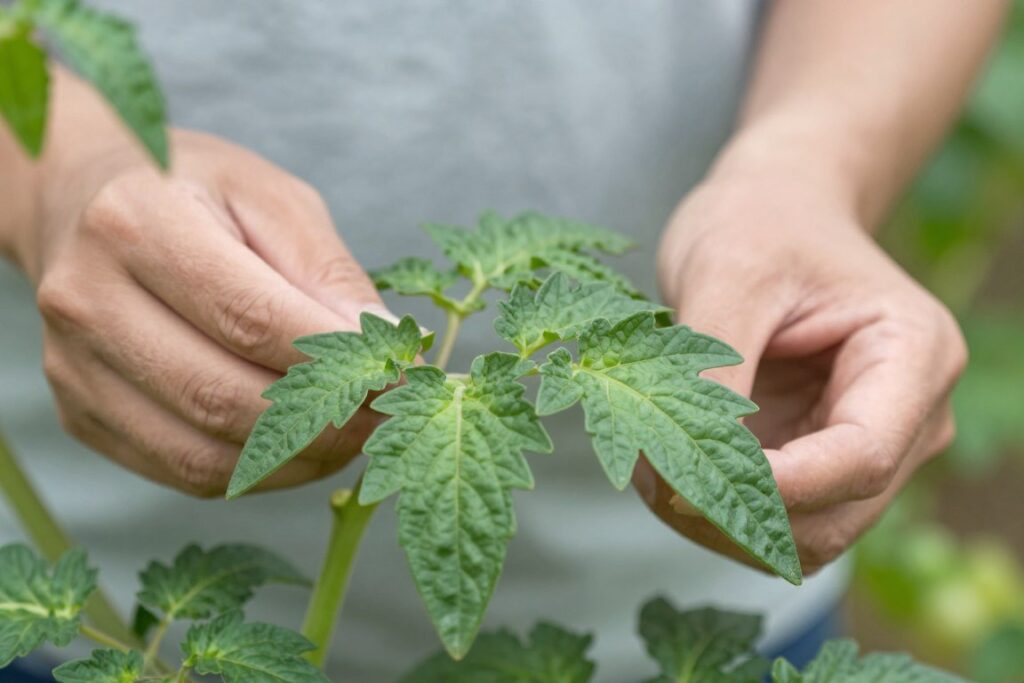
| Observed Symptom | Primary Suspect | Investigation Method | Corrective Action |
| Yellowing lower leaves | Overwatering or low N | Inspect soil moisture depth and root tip color | Allow soil drying; apply balanced organic liquid fertilizer |
| Stunted, pale growth | Insufficient sun | Calculate actual direct sunlight hours received | Relocate container to brighter exposure or install LED lights |
| Sudden midday wilting | Dry soil or root rot | Check potting media moisture and drainage holes | Soak dry root ball thoroughly; clear blocked drain outlets |
| Blossom drop without fruit | Temperature stress | Review recent daytime highs and nocturnal lows | Erect temporary shade cloth; hand-pollinate blossoms with brush |
| Spotted, stippled foliage | Spider mites or aphids | Examine leaf undersides with magnifying lens | Rinse leaves with water stream; apply organic insecticidal soap |
Modern Gardening Technology and Growing Systems
Technological innovations in residential agriculture streamline routine plant management without altering core biological principles. Evaluating modern equipment options helps home growers decide where automation provides practical value.
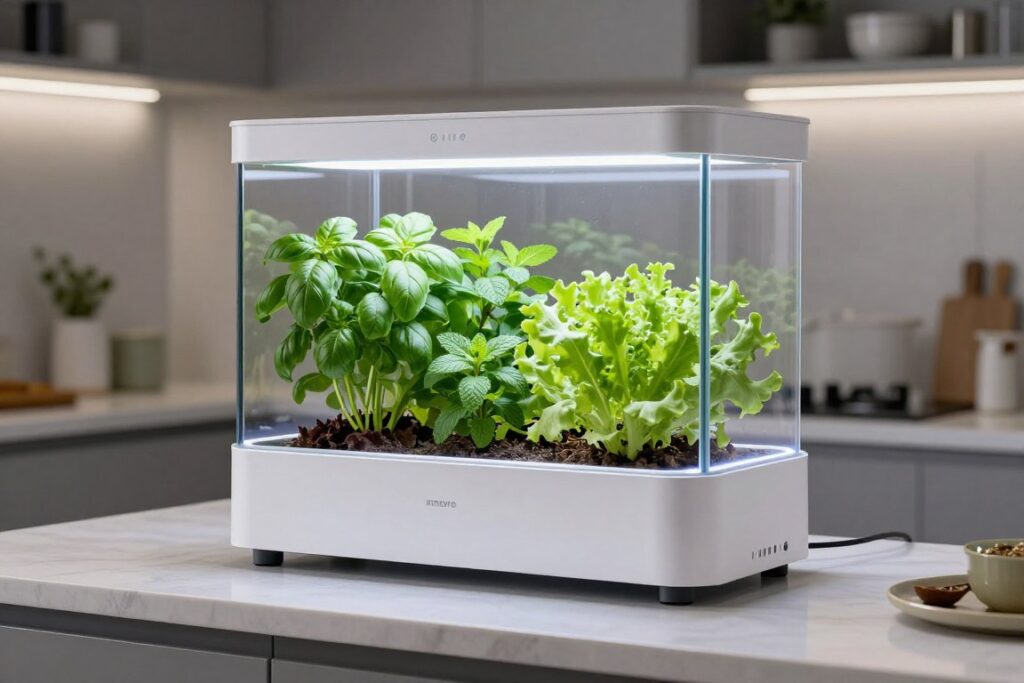
Self-Watering Reservoirs
Capillary wick systems and sub-irrigation chambers maintain stable root moisture over several days. They benefit busy apartment residents by preventing drought stress, though outdoor units require overflow drains to avoid waterlogging during prolonged rain.
Compact Hydroponics
Countertop deep-water culture and nutrient-film units circulate oxygenated water without soil media. These systems accelerate indoor leafy growth within interior rooms, though equipment costs and continuous electrical reliance represent notable considerations.
Smart Irrigation Timers
Bluetooth and Wi-Fi battery valves automate drip irrigation according to programmed schedules. They deliver dependable hydration across multi-pot balcony setups during summer heatwaves, requiring outdoor hose connections and periodic battery checks.
Frequently Asked Questions
What are the easiest vegetables for beginners to grow at home?
Looseleaf lettuce, radishes, and green onions are the most forgiving crops for beginning cultivators. These plants develop rapidly, require modest root depth, and tolerate minor fluctuations in watering and sunlight.
How much direct sunlight do home vegetables need each day?
Fruiting crops such as tomatoes and peppers require full daily exposure to direct sunlight. Leafy greens, radishes, and culinary herbs produce acceptable vegetative yields under partial shade or indirect ambient light.
Can vegetables grow successfully indoors without natural sunlight?
Salad greens, microgreens, and herbs thrive indoors when supported by full-spectrum LED grow fixtures suspended above foliage. Fruiting vegetables remain difficult to crop indoors without high-powered specialized horticultural lighting and manual hand-pollination.
What type of soil should be used for container vegetable gardening?
Enclosed containers require porous potting mixes composed of peat moss or coconut coir, perlite, and aged compost. Native backyard garden soil compacts tightly inside container walls, preventing root respiration and stopping water drainage.
How often should container vegetables be watered?
Container soil requires irrigation whenever the top layer feels dry beneath the surface. Porous terra cotta and small containers dry rapidly during warm weather, whereas large sub-irrigated planters sustain moisture over several days.
Do container vegetables need fertilizer?
Container crops require supplemental feeding because daily watering leaches dissolved nutrients through bottom drainage holes. Applying balanced organic liquid fertilizers during active growth periods sustains vigorous foliage development and fruit set.
What vegetables produce well in deep shade?
No culinary vegetable thrives in absolute darkness, but spinach, Swiss chard, and mint tolerate filtered morning light or deep partial shade. Fruiting crops fail to produce blossoms in shaded microclimates and must be avoided.
How can balcony gardeners prevent containers from blowing over?
Balcony gardeners should select wide, heavy planters or group smaller pots together inside stable wooden crates. Anchoring vertical trellises securely to structural balcony railings prevents tall climbing crops from toppling in strong wind gusts.
Cultivating Abundance Beyond Spatial Boundaries
Successful domestic food production rests on keen horticultural observation, appropriate crop selection, and responsive environmental stewardship rather than expansive property boundaries. Nurturing a solitary windowsill planter box or managing a compact balcony vertical trellis reconnects households to essential biological cycles and fresh nutritional abundance. Beginning with a single container of salad greens or culinary herbs offers an immediate, rewarding pathway into the enduring tradition of home cultivation.


